




 View photos
Arena di Verona Seating Map
Your seating plan and chart: where to sit, the best seats and the view from your seat
Arena di Verona in photos
10 outside · 3 inside the venue
Where to sit at Arena di Verona
The best seats at Arena di Verona are 1st Sector Stalls Platinum (central front rows) for the view. For value, choose 1st Sector Verdi and 2nd Sector Puccini. For atmosphere, head to 4th, 5th and 6th Sectors (gradinata stone steps). Avoid 6th Sector (highest gradinata steps). Arena di Verona seats 22,000, home of Arena di Verona Opera Festival.
1st Sector Stalls Platinum (central front rows)
Central, numbered, padded seats closest to the stage deliver the most direct sightline and the best acoustics in the house.
Full detail Best value1st Sector Verdi and 2nd Sector Puccini
These named upper sectors keep proper backed seats and an elevated, full view of the large stage at a fraction of the premium-stalls price.
Full detail Best atmosphere4th, 5th and 6th Sectors (gradinata stone steps)
Sitting on the ancient stone steps, as Roman audiences did, gives the most communal, atmospheric experience - and the cheapest tickets. Bring a cushion.
Full detail Where to avoid6th Sector (highest gradinata steps)
The highest, most distant unnumbered stone steps - furthest from the stage, no backrest and a hard surface for a multi-hour performance.
Full detailAbout Arena di Verona
The Arena di Verona is a 1st-century Roman amphitheatre and the home of the annual Arena di Verona Opera Festival, with a modern summer capacity of around 22,000 (typically reduced to roughly 13,000-15,000 during opera performances once the stage occupies part of the cavea). Seating is split between numbered, chaired sectors on the lower and middle tiers and the unupholstered ancient stone steps (gradinata) higher up. The premium central stalls (Poltronissime Platinum, Gold and Silver) in the first sector offer the closest, most central views and best acoustics, while the named upper tiers (Verdi, Puccini, Rossini) give a fuller view of the staging for less. The best value lies in the Verdi and Puccini sectors, which keep proper backed seats and a good sightline, while the cheapest tickets are the unnumbered 4th, 5th and 6th sectors on the stone steps. Note that the Arena is open-air with no roof, and step seats have no backrests, so a cushion is recommended for the gradinata.
A remarkably intact Roman amphitheatre built from pink-tinged limestone around AD 30, once holding 30,000 spectators. For the summer opera festival it seats about 15,000 on ancient stone terraces and modern chairs, renowned for its natural acoustics and candlelit atmosphere.
Seating plan & map
General seating reference for Arena di Verona. Check your selected event for its exact configuration.
How the venue is set up
Opera Festival (in the round / large-stage)
The flagship Arena di Verona Opera Festival (runs roughly mid-June to mid-September). A large open-air stage is built at one end, occupying around a third of the cavea, and seating is arranged in numbered stalls (Poltronissime and Poltrone) on the arena floor plus tiered sectors rising up the steps. Performance capacity is typically around 13,000-15,000.
Concerts (pop / rock / classical crossover)
Outside and alongside the festival the Arena hosts concerts by artists such as Andrea Bocelli, Laura Pausini, Eros Ramazzotti and Zucchero. A stage is set at one end and the floor and tiers are used for seating; exact sector layouts and any standing areas vary by promoter and event.
Galas and ceremonial events
The Arena occasionally stages galas, televised events and major ceremonies (it is scheduled to feature in the 2026 Winter Olympics/Paralympics ceremonies). Configurations are bespoke, but the same tiered cavea and stone-step structure is used.
Seating levels explained
Poltronissime (Premium central stalls)1st Sector Stalls - Platinum, Gold, Silver
The most expensive seating: numbered, upholstered seats with padded backrests on the arena floor closest to the stage. Platinum occupies the central first rows, Gold sits to the sides and rear of Platinum (and includes the Royal box area), and Silver sits behind/around the Gold.
Pros: Closest, most central views; best acoustics; comfortable padded seats with backrests.
Cons: Highest prices (well over EUR 200 per seat for top categories); side Silver/Gold positions are slightly off-centre.
Stalls & Tribune (numbered floor and lower tier)
Numbered, padded seats further back and around the premium stalls, including the 2nd Sector Stalls and the Tribune sectors (with a family-priced Tribune Family option and a U30 youth rate in the 2nd Sector). Proper chaired seating at a mid-range price.
Pros: Comfortable backed seating; reasonable proximity to the stage; family and under-30 discounts available.
Cons: Further from the stage than the Poltronissime; side positions can be angled.
Named upper sectors - Verdi, Puccini, Rossini1st Sector Verdi, 2nd Sector Puccini, 3rd Sector Rossini
Numbered seats fitted on the first tiers of the surrounding steps. Verdi is the lowest and best of these, then Puccini, then Rossini higher up. Seats here have backrests but are not upholstered.
Pros: Good elevated overview of the full stage and staging; backed seats; strong value, especially Verdi and Puccini.
Cons: Backrests are unpadded; further and higher than the floor stalls; Rossini is noticeably higher up.
Gradinata (ancient stone steps)4th, 5th and 6th Sectors
The cheapest tickets: original Roman stone steps with no chairs and (for the upper sectors) unnumbered, first-come-first-served seating within your sector. The 6th sector is the highest and least expensive.
Pros: Lowest prices (from around EUR 20-30); authentic amphitheatre atmosphere; lively, communal feel.
Cons: No backrest and a hard stone surface (a cushion is strongly advised); unnumbered seating means arriving early; the highest rows are far from the stage.
Best seats at Arena di Verona
Best overall view and sound
1st Sector Stalls Platinum (central front rows)
Central, numbered, padded seats closest to the stage deliver the most direct sightline and the best acoustics in the house.
Best value (comfort vs price)
1st Sector Verdi and 2nd Sector Puccini
These named upper sectors keep proper backed seats and an elevated, full view of the large stage at a fraction of the premium-stalls price.
Best atmosphere / authentic experience
4th, 5th and 6th Sectors (gradinata stone steps)
Sitting on the ancient stone steps, as Roman audiences did, gives the most communal, atmospheric experience - and the cheapest tickets. Bring a cushion.
Best for taking in the full opera staging
1st Sector Verdi / 2nd Sector Puccini (lower numbered steps)
The elevated angle lets you see the whole stage picture and the scale of the Arena's famous large-scale sets, which can be lost from the very front floor seats.
Best for families
Sector Tribune Family (and 2nd Sector Stalls U30 for young adults)
The Tribune Family sector offers a symbolic child rate (around EUR 2.50) with a reduced adult ticket, while the U30 rate gives under-30s a low flat price in the 2nd Sector Stalls.
Best for accessibility with a good view
1st Sector Stalls Silver Easy
This accessible, numbered, padded floor sector keeps you close to the stage while providing step-free, easy-access seating.
| For | Sections | Why |
|---|---|---|
| Best overall view and sound | 1st Sector Stalls Platinum (central front rows) | Central, numbered, padded seats closest to the stage deliver the most direct sightline and the best acoustics in the house. |
| Best value (comfort vs price) | 1st Sector Verdi and 2nd Sector Puccini | These named upper sectors keep proper backed seats and an elevated, full view of the large stage at a fraction of the premium-stalls price. |
| Best atmosphere / authentic experience | 4th, 5th and 6th Sectors (gradinata stone steps) | Sitting on the ancient stone steps, as Roman audiences did, gives the most communal, atmospheric experience - and the cheapest tickets. Bring a cushion. |
| Best for taking in the full opera staging | 1st Sector Verdi / 2nd Sector Puccini (lower numbered steps) | The elevated angle lets you see the whole stage picture and the scale of the Arena's famous large-scale sets, which can be lost from the very front floor seats. |
| Best for families | Sector Tribune Family (and 2nd Sector Stalls U30 for young adults) | The Tribune Family sector offers a symbolic child rate (around EUR 2.50) with a reduced adult ticket, while the U30 rate gives under-30s a low flat price in the 2nd Sector Stalls. |
| Best for accessibility with a good view | 1st Sector Stalls Silver Easy | This accessible, numbered, padded floor sector keeps you close to the stage while providing step-free, easy-access seating. |
Seats to avoid & obstructed views
6th Sector (highest gradinata steps): The highest, most distant unnumbered stone steps - furthest from the stage, no backrest and a hard surface for a multi-hour performance.
4th and 5th Sectors (upper stone steps): Unnumbered, first-come-first-served stone steps with no chairs or backrests; a cushion is essential and you must arrive early to claim a spot.
Side positions of Gold / Silver / standard stalls: Although padded and close, far-side floor seats are angled relative to the stage, so part of the staging can be viewed obliquely.
Rossini (3rd Sector) outer rows: The highest of the chaired named sectors; backrests are unpadded and the distance from the stage is considerable.
Any sector during rain: The Arena is fully open-air with no roof; performances can be delayed or affected by weather and there is no covered seating.
Accessibility & companion seating
The Arena provides accessible seating, most notably the numbered, padded '1st Sector Stalls Silver Easy' on the arena floor, which offers easy step-free access close to the stage. Reduced rates are available for holders of disability certification (and typically a companion). Because the venue is an ancient monument with many steps and uneven stone surfaces in the upper tiers, accessible patrons are directed to the floor-level easy-access sectors rather than the gradinata.
Where: Accessible floor seating is concentrated in the 1st Sector Stalls Silver Easy area, accessed via Gate 1. The stone-step sectors (4th-6th) are not suitable for reduced-mobility visitors.
Food & drink at Arena di Verona
Catering inside the Roman amphitheatre is deliberately simple: bar and refreshment facilities operate within the arena during the Opera Festival, and most opera-goers eat properly in Verona before or after the performance. The festival also sells a separate premium Star Roof dining experience.
The official FAQs state that outside food and drink cannot be brought into the Arena, and plastic bottles larger than half a litre, glass and other containers are prohibited.
Worth seeking out
- Bar facilities inside the amphitheatre
- Star Roof dining experience bookable through the festival
Hotels near Arena di Verona
All hotels & live prices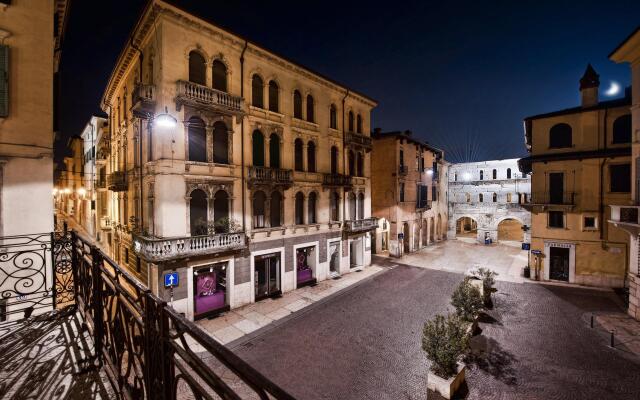 5-star
NH Collection Palazzo Verona
Verona
See live prices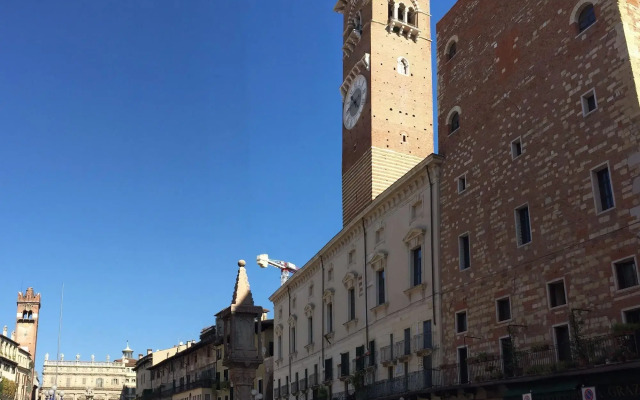 5-star
Hotel Gabbia d'Oro
Verona
See live pricesStays close to Arena di Verona, with availability checked when we built this guide. Tap a hotel for live prices on your dates.
Getting there
Transport
In the heart of Verona on Piazza Bra. It is about a 15-to-20 minute walk or a short bus ride from Verona Porta Nuova railway station; the old town around it is largely pedestrianized.
The area
On Piazza Bra in Verona's historic center, ringed by cafés and palazzi and a short stroll from Via Mazzini's shops and Juliet's House.
Arena di Verona · Verona, Italy
Parking near Arena di Verona
The closest car parks to Arena di Verona, each marked with a blue P on the map above. On event days public transport is usually quicker than driving.
- Parcheggio Piazza San NicolòPiazza San Nicolò, Verona174 m
- Piazza NogaraPiazza Nogara, Verona256 m
- Parking 1 VeronaPiazza Nogara, 2, Verona262 m
- ParkeringPiazza Cittadella, 17/3, Verona271 m
- Parcheggio VeronaPiazza Cittadella, 16, Verona299 m
- Parksikuro.comVia dei Mutilati, 3, Verona313 m
Frequently asked questions
What are the best seats at Arena di Verona?
For the best overall view and acoustics, choose the central 1st Sector Stalls (Poltronissime Platinum), the padded numbered seats in the front-centre of the arena floor. For the best value with proper backed seats, the Verdi and Puccini named sectors on the lower numbered steps give an excellent full view of the staging for much less.
What are the cheapest seats at Arena di Verona?
The cheapest tickets are in the 4th, 5th and 6th Sectors - the ancient stone steps (gradinata), with prices starting from around EUR 20-30. These are unnumbered, first-come-first-served and have no chairs or backrests, so a cushion is recommended and arriving early helps you get a better spot.
Is Arena di Verona accessible for wheelchair users?
Yes. The Arena offers accessible, step-free floor seating - notably the numbered, padded '1st Sector Stalls Silver Easy' close to the stage - and reduced rates for disability-certificate holders. The upper stone-step sectors are not suitable for reduced mobility, so accessible patrons are seated on the arena floor.
Does Arena di Verona have a roof or covered seating?
No. The Arena di Verona is a fully open-air Roman amphitheatre with no roof and no covered seating. Opera performances take place in the evening, so daytime sun is not an issue, but performances can be affected by rain.
Do I need to bring a cushion to the Arena di Verona?
If you have a stone-step ticket (4th, 5th or 6th Sector) a cushion is strongly recommended, as these ancient steps have no backrests and the stone is hard for a performance lasting several hours. Cushions can usually be bought at the venue if needed. Numbered chaired sectors do not require one.
What is the difference between numbered and unnumbered seats at the Arena?
All the chaired sectors - the Poltronissime stalls, Tribune, and the Verdi, Puccini and Rossini sectors - have specific numbered seats. The cheaper stone-step sectors (4th-6th) are unnumbered and free-seating within your sector, so it is first-come-first-served and worth arriving early.
What is the capacity of the Arena di Verona?
The amphitheatre has a modern summer capacity of around 22,000. During opera performances the large stage occupies roughly a third of the seating, so the working capacity is typically around 13,000-15,000. Its original Roman capacity is estimated at about 30,000.
What events are held at the Arena di Verona?
Its signature event is the annual Arena di Verona Opera Festival (around mid-June to mid-September), which has run since 1913. The Arena also hosts major concerts (artists such as Andrea Bocelli, Laura Pausini, Eros Ramazzotti and Zucchero) and special galas and ceremonies.
Which seats are best for concerts at Arena di Verona?
The flagship Arena di Verona Opera Festival (runs roughly mid-June to mid-September). A large open-air stage is built at one end, occupying around a third of the cavea, and seating is arranged in numbered stalls (Poltronissime and Poltrone) on the arena floor plus tiered sectors rising up the steps. Performance capacity is typically around 13,000-15,000.
How do section numbers work at Arena di Verona?
Section numbers at Arena di Verona follow the seating tiers. Poltronissime (Premium central stalls): 1st Sector Stalls - Platinum, Gold, Silver; Named upper sectors - Verdi, Puccini, Rossini: 1st Sector Verdi, 2nd Sector Puccini, 3rd Sector Rossini; Gradinata (ancient stone steps): 4th, 5th and 6th Sectors.
Does Arena di Verona have a seating map with seat numbers?
Yes. Arena di Verona's seating map is split into numbered sections across its tiers (Poltronissime (Premium central stalls) 1st Sector Stalls - Platinum, Gold, Silver; Named upper sectors - Verdi, Puccini, Rossini 1st Sector Verdi, 2nd Sector Puccini, 3rd Sector Rossini; Gradinata (ancient stone steps) 4th, 5th and 6th Sectors), with individual seat numbers running within each section. Check the seating map on this page or the official chart for exact seat numbers.
What is the view like from the seats at Arena di Verona?
The best views at Arena di Verona are from 1st Sector Stalls Platinum (central front rows) — Central, numbered, padded seats closest to the stage deliver the most direct sightline and the best acoustics in the house. The weakest are 6th Sector (highest gradinata steps): The highest, most distant unnumbered stone steps - furthest from the stage, no backrest and a hard surface for a multi-hour performance. For a seat-by-seat view, see the view-from-seat photos and the seating map for Arena di Verona.
Where should I sit at Arena di Verona with kids?
For families at Arena di Verona, Sector Tribune Family (and 2nd Sector Stalls U30 for young adults) works best — The Tribune Family sector offers a symbolic child rate (around EUR 2.50) with a reduced adult ticket, while the U30 rate gives under-30s a low flat price in the 2nd Sector Stalls.
What are the stands at Arena di Verona?
Arena di Verona is made up of 4 main stands: Poltronissime (Premium central stalls); Stalls & Tribune (numbered floor and lower tier); Named upper sectors - Verdi, Puccini, Rossini; Gradinata (ancient stone steps).
What is the view like from the seats at Arena di Verona?
For the best view at Arena di Verona, aim for 1st Sector Stalls Platinum (central front rows) (Central, numbered, padded seats closest to the stage deliver the most direct sightline and the best acoustics in the house.); 1st Sector Verdi and 2nd Sector Puccini (These named upper sectors keep proper backed seats and an elevated, full view of the large stage at a fraction of the premium-stalls price.). The view is most restricted from 6th Sector (highest gradinata steps) (The highest, most distant unnumbered stone steps - furthest from the stage, no backrest and a hard surface for a multi-hour performance.).
Where can I park at Arena di Verona?
Car parks near Arena di Verona include Parcheggio Piazza San Nicolò, Piazza Nogara, Parking 1 Verona, Parkering and more. The closest is Parcheggio Piazza San Nicolò, about 174 m from the venue. On event days public transport is usually quicker than driving, so check the transport options too.
More seating guides
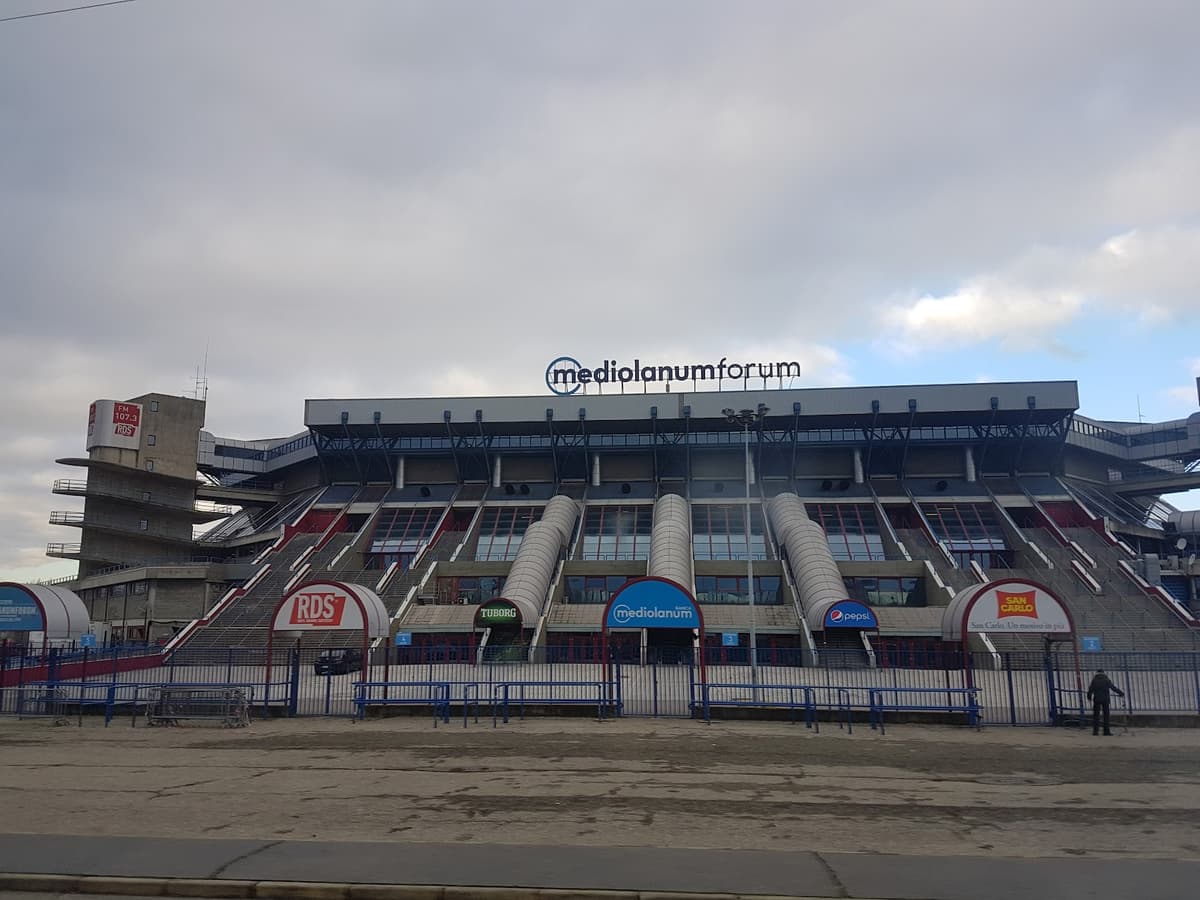
Unipol Forum
Milan (Assago), Italy · Arena
Seating guide Photo: Gandalf 74 / Google Maps
San Siro (Giuseppe Meazza)
Milan, Italy · Football stadium
Seating guide
Allianz Stadium
Turin, Italy · Football stadium
Seating guide
Foro Italico (Centrale)
Rome, Italy · Tennis stadium
Seating guide
Gewiss Stadium
Bergamo, Italy · Football stadium
Seating guide Photo: Andrea Fantin / Google Maps
Stadio Diego Armando Maradona
Naples, Italy · Football stadium
Seating guidePopular seating guides

The O2 Arena
London, England · Arena
Seating guide
Wembley Stadium
London, England · Multi-sport stadium
Seating guide
Tottenham Hotspur Stadium
London, England · Football stadium
Seating guide
Old Trafford
Manchester, England · Football stadium
Seating guide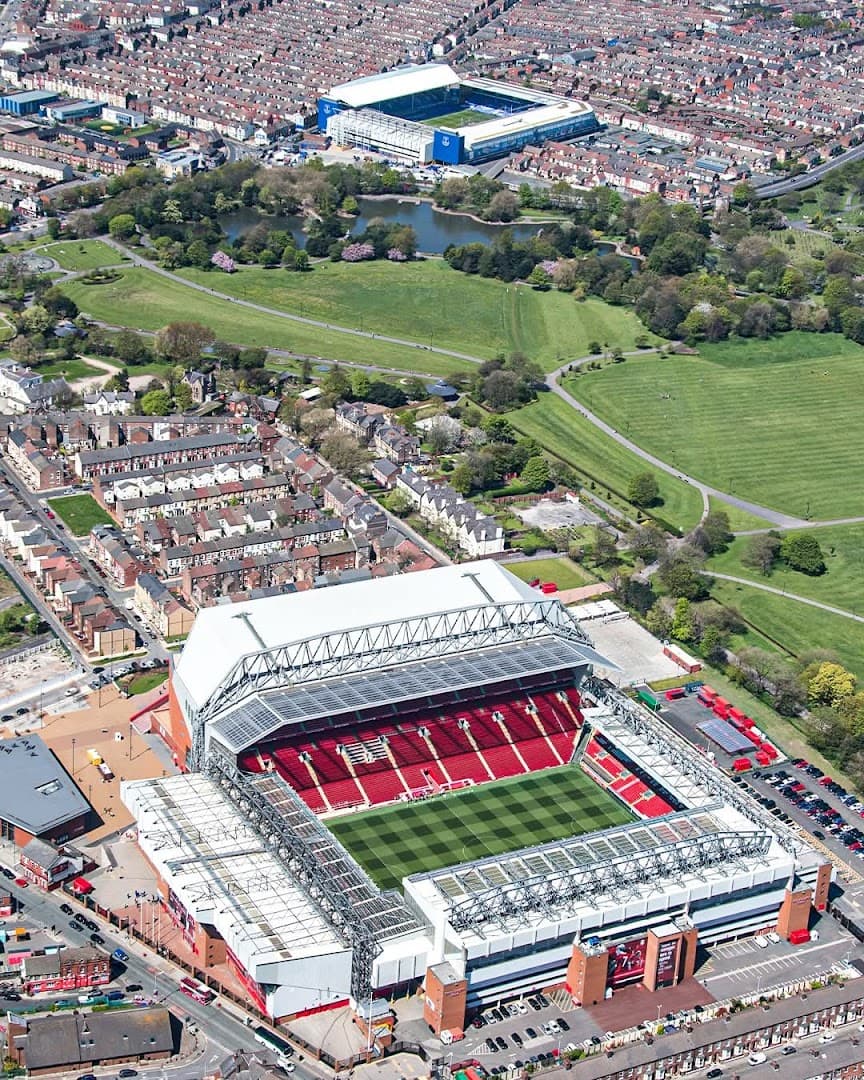
Anfield
Liverpool, England · Football stadium
Seating guide
Ibrox Stadium
Glasgow, Scotland · Football stadium
Seating guideAlso in Verona
More to plan and book around Verona, all on Event Escapes.
Sources
- Arena di Verona - Official Tickets, Rates and Sectors
- Verona Arena - Wikipedia
- Verona Arena Seating Plan - verona-tickets.com
- The Verona Opera Festival - ticket types and Arena seating information (tickitaly)
- Arena di Verona Opera Festival - Official site
Hero image: Claconvr, CC BY-SA 4.0 — via Wikimedia Commons