




 View photos
Rod Laver Arena Seating Map
Your seating plan and chart: where to sit, the best seats and the view from your seat
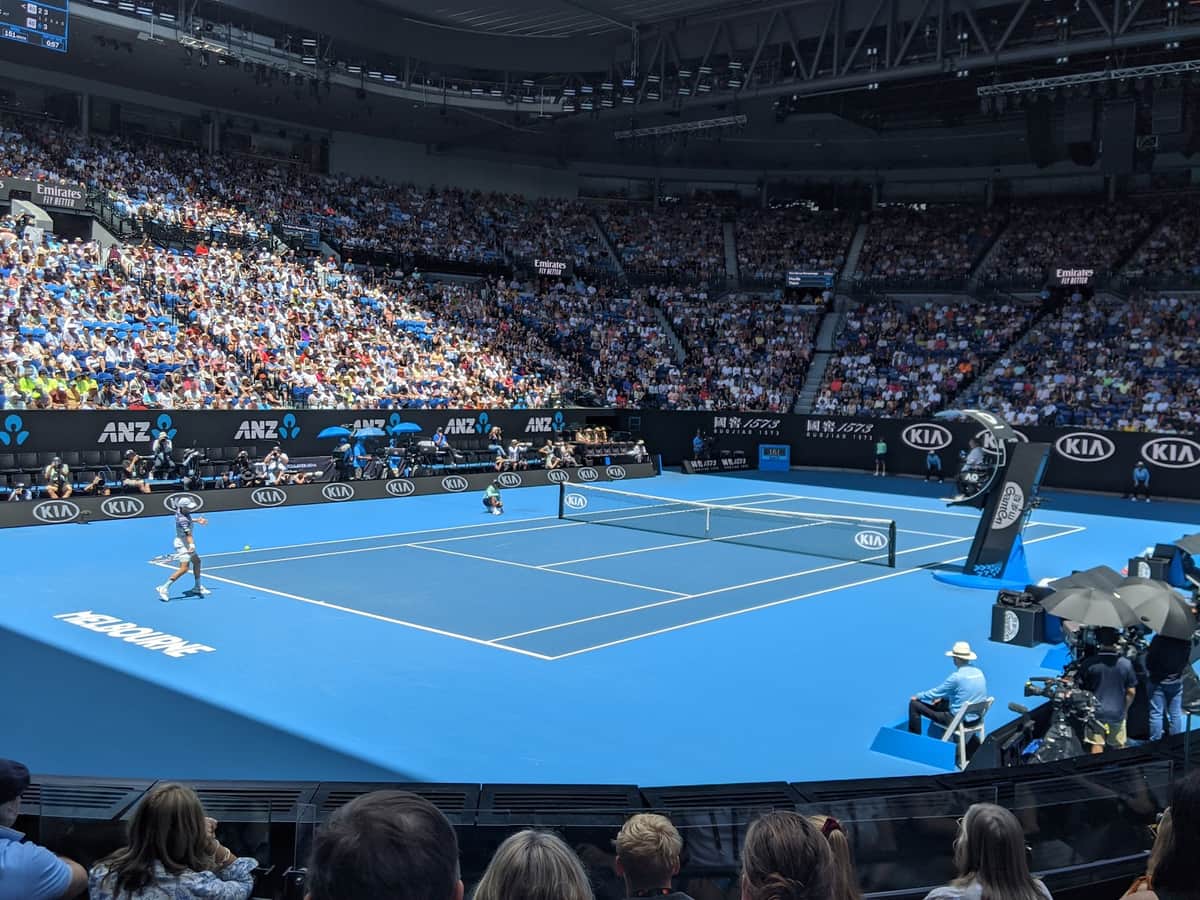
Rod Laver Arena in photos
5 outside · 5 inside the venue
Where to sit at Rod Laver Arena
The best seats at Rod Laver Arena are Lower-level behind-baseline sections ~8–12 (and the opposite baseline), first ~15 rows for the view. For value, choose Upper Level CAT 2/CAT 3 (sections ~30–65). For atmosphere, head to Lower CAT 1 baseline and corner sections, front rows. Avoid Flat-floor concert sections (rear floor seats, e.g. D–G, I). Rod Laver Arena seats 14,820, home of Australian Open.
Lower-level behind-baseline sections ~8–12 (and the opposite baseline), first ~15 rows
Behind-the-server baseline angle gives the truest sense of depth and pace; cushioned seats with Atrium access, and these sections fall in shade for day sessions.
Full detail Best valueUpper Level CAT 2/CAT 3 (sections ~30–65)
A big saving versus the lower bowl while still delivering clean, unobstructed sightlines — there are effectively no bad upper seats.
Full detail Best atmosphereLower CAT 1 baseline and corner sections, front rows
Closest proximity to players and the loudest crowd energy; corners combine a good angle with sun protection.
Full detail Where to avoidFlat-floor concert sections (rear floor seats, e.g. D–G, I)
Floor seating is on a flat (un-raked) floor, so someone in front can block the view; rear floor rows can be worse than tiered bowl seats.
Full detailAbout Rod Laver Arena
Rod Laver Arena (Melbourne Park) holds 14,820 for tennis — the Australian Open centre court — and converts for concerts with a retractable roof that now closes in about five minutes. Seating is the Lower Level (CAT 1) and the Upper Level (CAT 2/CAT 3). Because it was purpose-built for tennis, even back-row upper seats have clean, unobstructed sightlines.
The main show court of Melbourne Park and the centerpiece of the Australian Open, seating about 14,820. It was the first Grand Slam arena with a retractable roof, letting play continue through heat and rain, and doubles as a major concert venue.
Seating plan & map
This is the map used for ticket sales at Rod Laver Arena. Exact configuration varies by event.
How the venue is set up
Australian Open tennis
Centre-court bowl wrapping the court on all four sides; capacity 14,820. The chair umpire sits on the west sideline — a useful orientation landmark.
Basketball / extra-seat sports
Up to 15,400 when temporary courtside seats are added.
Concert — end stage (fully seated)
Up to ~14,200. Part of the southern lower bowl folds down and retracts for the stage; audience sits on the other three sides plus temporary floor seating (sections A–G, I).
Concert — end stage with standing floor (GA)
Temporary floor seats removed so the floor in front of the stage becomes a GA standing pit, with the three permanent bowl sides reserved.
Concert — in the round
Centre 360-degree stage (sometimes with LED floor and overhead screens) so the audience surrounds the stage.
Roof open vs closed
World's first tennis venue with a retractable roof; closes in ~5 minutes. When closed it is fully indoor/climate-protected, removing sun and weather for all seats.
Seating levels explained
Lower Level (CAT 1)Approx. sections 1–24, rows A–U (~21 rows)
The closest seating to the court/stage on a moderate incline. Most expensive category for tennis.
Pros: Closest to the action; best detail and atmosphere; cushioned prime baseline seats; corner/behind-baseline catch shade in day sessions.
Cons: Highest price; sideline lower rows can be sun-exposed on afternoon day sessions; front lower sideline rows have a flatter angle.
Lower sideline (CAT 2)East ~sections 4–7, west ~13–16 (rows F–P)
Mid-lower seats along the long sides, level with the net — the classic broadcast side-on tennis view.
Pros: Side-on view follows rallies down both baselines; good value vs premium baseline seats.
Cons: Can be in the sun during day sessions until the roof closes or sun sets (~8:30–8:45pm in January).
Upper Level (CAT 2 / CAT 3)Approx. sections 30–65, rows AA–PP (~16 rows)
Steeply tiered upper bowl in two price bands — lower upper (CAT 2) and the highest seats (CAT 3). Built for tennis, so sightlines are unobstructed even at the back.
Pros: Best value; clear unobstructed sightlines from every row; mostly shaded; elevated overview ideal for tactics.
Cons: Far from the court/stage, so less detail and atmosphere; row AA can be partly blocked by handrails; back row PP has limited legroom.
Best seats at Rod Laver Arena
Best tennis view (overall)
Lower-level behind-baseline sections ~8–12 (and the opposite baseline), first ~15 rows
Behind-the-server baseline angle gives the truest sense of depth and pace; cushioned seats with Atrium access, and these sections fall in shade for day sessions.
Best value
Upper Level CAT 2/CAT 3 (sections ~30–65)
A big saving versus the lower bowl while still delivering clean, unobstructed sightlines — there are effectively no bad upper seats.
Best for shade (day sessions)
Behind north baseline ~20–24 / 52–55 and ~1–3 & 17–18 lower; upper ~30–34, 44–53, 61–65
These behind-baseline and upper sections are protected from the January sun for most of the day; the north side is largely shaded all day.
Best atmosphere / closest
Lower CAT 1 baseline and corner sections, front rows
Closest proximity to players and the loudest crowd energy; corners combine a good angle with sun protection.
Concert — closest to stage
Floor sections A, B, C — front rows (end-stage shows)
Directly in front of and nearest the stage — the prime concert positions when temporary floor seating is used.
Concert — best reserved bowl seats
Lower tiered sections facing the stage (e.g. ~8, 18, then 7, 19 and 6, 20)
On a raised rake facing the stage these give an unobstructed elevated view that avoids the flat-floor sightline problems.
| For | Sections | Why |
|---|---|---|
| Best tennis view (overall) | Lower-level behind-baseline sections ~8–12 (and the opposite baseline), first ~15 rows | Behind-the-server baseline angle gives the truest sense of depth and pace; cushioned seats with Atrium access, and these sections fall in shade for day sessions. |
| Best value | Upper Level CAT 2/CAT 3 (sections ~30–65) | A big saving versus the lower bowl while still delivering clean, unobstructed sightlines — there are effectively no bad upper seats. |
| Best for shade (day sessions) | Behind north baseline ~20–24 / 52–55 and ~1–3 & 17–18 lower; upper ~30–34, 44–53, 61–65 | These behind-baseline and upper sections are protected from the January sun for most of the day; the north side is largely shaded all day. |
| Best atmosphere / closest | Lower CAT 1 baseline and corner sections, front rows | Closest proximity to players and the loudest crowd energy; corners combine a good angle with sun protection. |
| Concert — closest to stage | Floor sections A, B, C — front rows (end-stage shows) | Directly in front of and nearest the stage — the prime concert positions when temporary floor seating is used. |
| Concert — best reserved bowl seats | Lower tiered sections facing the stage (e.g. ~8, 18, then 7, 19 and 6, 20) | On a raised rake facing the stage these give an unobstructed elevated view that avoids the flat-floor sightline problems. |
Seats to avoid & obstructed views
Flat-floor concert sections (rear floor seats, e.g. D–G, I): Floor seating is on a flat (un-raked) floor, so someone in front can block the view; rear floor rows can be worse than tiered bowl seats.
Upper tier row AA: Front-row handrails can partially restrict the view.
Upper tier row PP (back row): Very restricted legroom at the very back of the upper bowl.
Highest upper-bowl rows / CAT 3: Long distance from court or stage means little detail and a remote feel, especially for concerts.
Sideline lower sections during day sessions (roof open): Exposed to direct sun on hot January afternoons until the sun sets or the roof closes.
Sections directly behind an end stage (concerts): For end-stage shows these are blocked from sale or have no view (full view only in-the-round).
Accessibility & companion seating
Accessible/wheelchair seating must be pre-booked through Ticketek (apply the accessible filter) or via Ticketek's Accessible Bookings Hotline on (03) 9286 1208. Each wheelchair bay has an adjacent companion seat. Step-free access at all turnstiles, ramps and lifts throughout (braille buttons, staff assistance), accessible toilets, and a Changing Places facility near Door 7. An external lift runs from the Margaret Court Arena forecourt to Concourse Level.
Where: Wheelchair-accessible bays with companion seats distributed around the bowl (concourse-level access); specific bays vary by event and show when the accessible filter is applied in Ticketek.
Food & drink at Rod Laver Arena
Rod Laver Arena's redeveloped concourses carry a dozen food and drink outlets, from grab-and-go counters such as Mr. Miyagi, Konbi Don, House of Franks and Sliced to Food Hall stations in the northern and southern pods. For drinks there is the checkout-free Arena Bar Express at Gate 4, the rooftop Upper Deck bar on Level 4 and the Railyards dining space on Level 3.
Worth seeking out
- Arena Bar Express — checkout-free bar at Gate 4
- Upper Deck rooftop bar on Level 4
- Mr. Miyagi grab-and-go at the Northern Pod
- House of Franks at Door 14
- Food Hall stations in both pods
Book with Event Escapes
Going to Rod Laver Arena? Tickets & hotels, sorted
The guide tells you where to sit — this is where you book it. Live-priced tickets and stays near the venue, all on Event Escapes.
Fixtures & tickets at Rod Laver Arena
All upcoming events at Rod Laver Arena
Australian Open | Session 1 - 1st Round - Day Session
Sun, 17 Jan 2027 · Australian Open (Grand Slam)
Australian Open | Session 2 - 1st Round - Night Session
Sun, 17 Jan 2027 · Australian Open (Grand Slam)
Australian Open | Session 4 - 1st Round - Night Session
Mon, 18 Jan 2027 · Australian Open (Grand Slam)
Australian Open | Session 3 - 1st Round - Day Session
Mon, 18 Jan 2027 · Australian Open (Grand Slam)
Australian Open | Session 5 - 1st Round - Day Session
Tue, 19 Jan 2027 · Australian Open (Grand Slam)
Australian Open | Session 6 - 1st Round - Night Session
Tue, 19 Jan 2027 · Australian Open (Grand Slam)
Australian Open | Session 8 - 2nd Round - Night Session
Wed, 20 Jan 2027 · Australian Open (Grand Slam)
Australian Open | Session 7 - 1st Round - Day Session
Wed, 20 Jan 2027 · Australian Open (Grand Slam)
Australian Open | Session 10 - 2nd Round - Night Session
Thu, 21 Jan 2027 · Australian Open (Grand Slam)
Australian Open | Session 9 - 2nd Round - Day Session
Thu, 21 Jan 2027 · Australian Open (Grand Slam)
Australian Open | Session 11 - 2nd Round - Day Session
Fri, 22 Jan 2027 · Australian Open (Grand Slam)
Australian Open | Session 12 - 3rd Round - Night Session
Fri, 22 Jan 2027 · Australian Open (Grand Slam)
Hotels near Rod Laver Arena
All hotels & live prices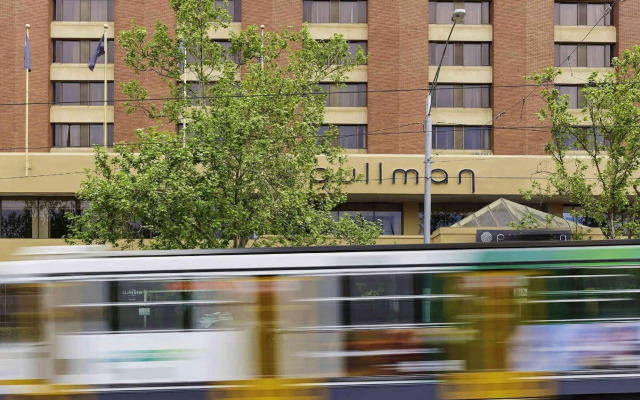 5-star
Pullman Melbourne on the Park
Melbourne
See live prices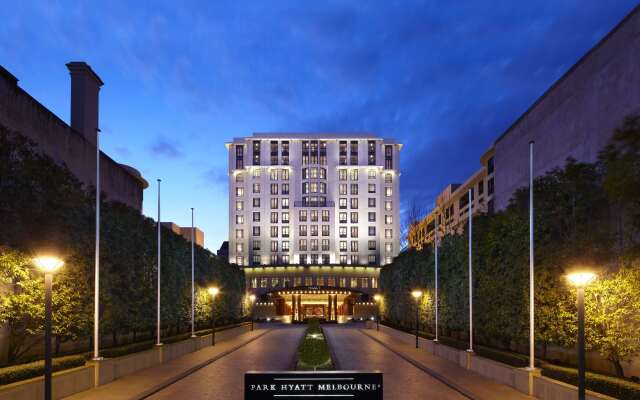 5-star
Park Hyatt Melbourne
Melbourne
See live prices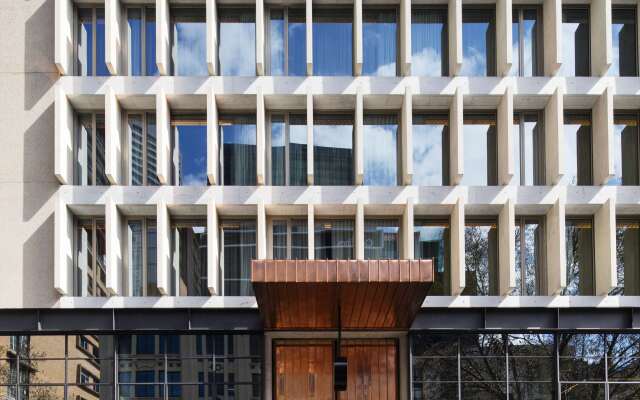 5-star
QT Melbourne
Melbourne
See live pricesStays close to Rod Laver Arena, with availability checked when we built this guide. Tap a hotel for live prices on your dates.
Getting there
Transport
In the Melbourne Park precinct east of the CBD. Walk from Richmond station or across the river from the city (about 15 minutes), or take the free tram to Melbourne Park; trams run along Flinders Street nearby.
The area
In Melbourne Park beside the Yarra River and the MCG, within the city's central sports precinct a short walk from Federation Square and the CBD.
Rod Laver Arena · Melbourne, Australia
Parking near Rod Laver Arena
The closest car parks to Rod Laver Arena, each marked with a blue P on the map above. On event days public transport is usually quicker than driving.
- Northern Car ParkTennis Centre Access Road, Melbourne213 m
- AIA Centre Loading DockBatman Avenue, Melbourne243 m
- Eastern Plaza Car ParkEastern Plaza Car Park, Melbourne498 m
- ParkingBoathouse Drive, Melbourne529 m
- Par car parkLansdowne St, Wellington Parade, East Melbourne699 m
- Pullman East Melbourne - Parking178-226 Wellington Parade, East Melbourne781 m
Frequently asked questions
What is the seating capacity of Rod Laver Arena?
About 14,820 for tennis, up to 15,400 for sports such as basketball with extra courtside seats, and up to ~14,200 for concerts with floor seating.
Where are the best seats for tennis at the Australian Open?
Lower-level seats behind the baseline (roughly sections 8–12 and the opposite baseline), within the first ~15 rows, give the truest sense of depth and pace, plus shade and food/drink access. For value, the upper bowl (CAT 2/CAT 3) still has clean, unobstructed sightlines at a much lower price.
Which seats are in the shade during day sessions?
The north side is largely shaded all day; behind-baseline sections (e.g. ~20–24, 52–55, 1–3/17–18 lower) and upper sections ~30–34, 44–53 and 61–65 stay shaded most of the day. Sideline lower seats can be sun-exposed in the afternoon until the sun sets (~8:30–8:45pm in January) or the roof closes.
Are there any bad seats at Rod Laver Arena?
Because the arena was purpose-built for tennis, even back-row upper seats have unobstructed sightlines. The main caveats are concert flat-floor seats (where someone in front can block the view), upper row AA (handrail) and back row PP (limited legroom).
What is the best seat for a concert?
For end-stage shows the front rows of floor sections A, B and C are closest to the stage; for a guaranteed clear line of sight, the raised lower bowl sections facing the stage (e.g. ~8, 18, 7, 19, 6, 20) avoid the flat-floor blocking problem.
Does Rod Laver Arena have a roof, and does it affect seating?
Yes — it was the world's first tennis venue with a retractable roof, which now closes in about five minutes. When closed, every seat is protected from sun and weather, so play and concerts continue indoors regardless of conditions.
How do I book accessible or wheelchair seating?
Pre-book through Ticketek (apply the accessible filter) or call Ticketek's Accessible Bookings Hotline on (03) 9286 1208. Wheelchair bays include an adjacent companion seat, and the venue has ramps, lifts, accessible toilets and a Changing Places facility.
What is the difference between CAT 1, CAT 2 and CAT 3 tickets?
CAT 1 is the lower level (closest, most expensive, rows A–U). CAT 2 and CAT 3 are the upper level (rows AA–PP), with CAT 2 lower down and CAT 3 the highest — both offering strong value and clear views.
How do section numbers work at Rod Laver Arena?
Section numbers at Rod Laver Arena follow the seating tiers. Lower Level (CAT 1): Approx. sections 1–24, rows A–U (~21 rows); Lower sideline (CAT 2): East ~sections 4–7, west ~13–16 (rows F–P); Upper Level (CAT 2 / CAT 3): Approx. sections 30–65, rows AA–PP (~16 rows).
Does Rod Laver Arena have a seating map with seat numbers?
Yes. Rod Laver Arena's seating map is split into numbered sections across its tiers (Lower Level (CAT 1) Approx. sections 1–24, rows A–U (~21 rows); Lower sideline (CAT 2) East ~sections 4–7, west ~13–16 (rows F–P); Upper Level (CAT 2 / CAT 3) Approx. sections 30–65, rows AA–PP (~16 rows)), with individual seat numbers running within each section. Check the seating map on this page or the official chart for exact seat numbers.
What is the view like from the seats at Rod Laver Arena?
The best views at Rod Laver Arena are from Lower-level behind-baseline sections ~8–12 (and the opposite baseline), first ~15 rows — Behind-the-server baseline angle gives the truest sense of depth and pace; cushioned seats with Atrium access, and these sections fall in shade for day sessions. The weakest are Flat-floor concert sections (rear floor seats, e.g. D–G, I): Floor seating is on a flat (un-raked) floor, so someone in front can block the view; rear floor rows can be worse than tiered bowl seats. For a seat-by-seat view, see the view-from-seat photos and the seating map for Rod Laver Arena.
What is the view like from the seats at Rod Laver Arena?
For the best view at Rod Laver Arena, aim for Lower-level behind-baseline sections ~8–12 (and the opposite baseline), first ~15 rows (Behind-the-server baseline angle gives the truest sense of depth and pace; cushioned seats with Atrium access, and these sections fall in shade for day sessions.); Upper Level CAT 2/CAT 3 (sections ~30–65) (A big saving versus the lower bowl while still delivering clean, unobstructed sightlines — there are effectively no bad upper seats.). The view is most restricted from Flat-floor concert sections (rear floor seats, e.g. D–G, I) (Floor seating is on a flat (un-raked) floor, so someone in front can block the view; rear floor rows can be worse than tiered bowl seats.).
Where can I park at Rod Laver Arena?
Car parks near Rod Laver Arena include Northern Car Park, AIA Centre Loading Dock, Eastern Plaza Car Park, Parking and more. The closest is Northern Car Park, about 213 m from the venue. On event days public transport is usually quicker than driving, so check the transport options too.
More seating guides

Margaret Court Arena
Melbourne, Australia · Tennis stadium
Seating guide
Marvel Stadium
Melbourne, Australia · Multi-sport stadium
Seating guide
Melbourne Cricket Ground
Melbourne, Australia · Cricket ground
Seating guide
Accor Stadium
Sydney, Australia · Multi-sport stadium
Seating guide
Adelaide Oval
Adelaide, Australia · Cricket ground
Seating guide Photo: Afterpay Arena / Google Maps
Afterpay Arena
Sydney, Australia · Arena
Seating guidePopular seating guides

The O2 Arena
London, England · Arena
Seating guide
Wembley Stadium
London, England · Multi-sport stadium
Seating guide
Tottenham Hotspur Stadium
London, England · Football stadium
Seating guide
Old Trafford
Manchester, England · Football stadium
Seating guide
Anfield
Liverpool, England · Football stadium
Seating guide
Ibrox Stadium
Glasgow, Scotland · Football stadium
Seating guideAlso in Melbourne
More to plan and book around Melbourne, all on Event Escapes.
Sources
- Rod Laver Arena — Wikipedia
- Ultimate Australian Open Seating Guide — Championship Tennis Tours
- Accessibility — Rod Laver Arena (official)
- Suites at Rod Laver Arena — Melbourne Park (official)
- Rod Laver Arena Virtual Venue 3D seat views — IOMEDIA
Hero image: Gracchus250, CC BY-SA 4.0 — via Wikimedia Commons