




 View photos
De Kuip (Stadion Feijenoord) Seating Map
Your seating plan and chart: where to sit, the best seats and the view from your seat
“De Kuip”
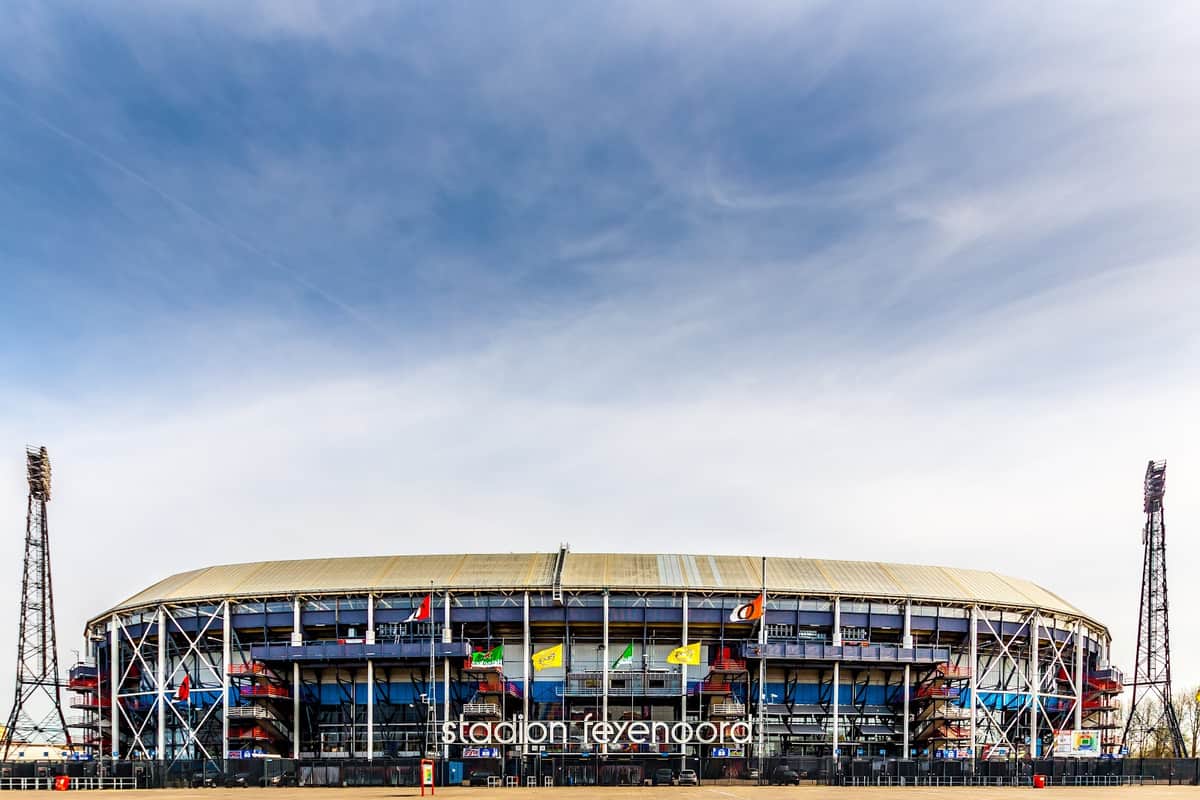
De Kuip (Stadion Feijenoord) in photos
5 outside · 1 inside the venue
Where to sit at De Kuip (Stadion Feijenoord)
The best seats at De Kuip (Stadion Feijenoord) are Lower ring (first ring) central halfway-line blocks on the Maastribune or Olympiatribune (e.g. premium sections Z2, Z3, W2, W3) for the view. For value, choose Upper ring (second ring) along the long sides. For atmosphere, head to Vak S, Gerard Meijer Tribune (behind the goal). Avoid Away end upper ring, Willem van Hanegem Tribune (vakken GG/FF, and EE when used). De Kuip (Stadion Feijenoord) seats 51,117, home of Feyenoord.
Lower ring (first ring) central halfway-line blocks on the Maastribune or Olympiatribune (e.g. premium sections Z2, Z3, W2, W3)
Side-on at the halfway line gives the truest read of the game with the play balanced in front of you; these central long-side blocks are the most sought-after general seats in the ground.
Full detail Best valueUpper ring (second ring) along the long sides
The elevated upper tier is among the most affordable seating yet delivers a panoramic, unobstructed view of the entire pitch, with much of it under the roof.
Full detail Best atmosphereVak S, Gerard Meijer Tribune (behind the goal)
Vak S is the home of Feyenoord's hard-core support and was converted to a standing-style section specifically to boost the atmosphere; it is the loudest part of De Kuip on a matchday.
Full detail Where to avoidAway end upper ring, Willem van Hanegem Tribune (vakken GG/FF, and EE when used)
Furthest end from the Vak S home support, high in the second ring and a long way from the pitch; behind-goal angle compresses play at the far end.
Full detailAbout De Kuip (Stadion Feijenoord)
De Kuip, officially Stadion Feijenoord, is Feyenoord's iconic oval bowl in Rotterdam, opened in 1937 and converted to an all-seater of around 51,117 in 1994. Its two free-hanging tiers (a lower "first ring" and an upper "second ring") wrap continuously around the pitch across four named stands: the Gerard Meijer Tribune and the Willem van Hanegem Tribune behind the goals, and the long-side Maastribune and Olympiatribune. The most coveted seats are the lower-ring central blocks along the halfway line on the Maastribune and Olympiatribune, while the loudest atmosphere comes from Vak S behind the goal on the Gerard Meijer Tribune. Best value is generally the upper second ring, which delivers a sweeping, elevated view of the whole pitch at lower prices. For football, capacity is reduced to roughly 47,500; for concerts the bowl holds up to around 50,000.
A historic two-tier bowl of about 47,500 whose steep, near-vertical stands earned it the nickname 'The Tub' and give it a famously intense atmosphere. It has hosted numerous European finals and Dutch cup finals.
Seating plan & map
General seating reference for De Kuip (Stadion Feijenoord). Check your selected event for its exact configuration.
How the venue is set up
Football (Feyenoord matches)
Standard configuration for Eredivisie, KNVB Cup and European fixtures. Effective capacity is reduced to approximately 47,500 for football. Home support and the most atmospheric standing-style area is Vak S on the Gerard Meijer Tribune behind the goal; away fans are placed in the opposite Willem van Hanegem end (second ring, vakken GG/FF, around 1,200 places, with EE sometimes added for European games).
Concerts (stadium shows)
De Kuip has hosted major stadium concerts since Bob Dylan with Eric Clapton in 1978 (David Bowie's Glass Spider Tour opened here in 1987; Marco Borsato played a record run in 2019). For concerts the pitch is converted to a standing floor / additional seating in front of a stage at one end, giving a capacity of up to roughly 50,000. Sightlines and distance vary sharply by stage position, and the open ends (behind the goals) are the most exposed to weather.
International football & cup finals
De Kuip has regularly staged the KNVB Cup final and was a UEFA Euro 2000 venue, hosting the final. In this mode tickets are sold neutrally with both sets of supporters split across the two ends, so the usual home/away block conventions differ from a normal Feyenoord matchday.
Seating levels explained
Lower ring (first ring) – long sidesHalfway-line blocks including premium sections Z2, Z3, W2, W3
The lower of the two free-hanging tiers along the two long sides, closest to the pitch at the side. Central halfway-line blocks here give the classic, level side-on view of the action.
Pros: Closest side-on view; excellent for following play and tactics; central blocks are the most in-demand in the ground
Cons: The most expensive general-admission areas; lower rows can have a flatter angle to the far side; some long-side sections are uncovered
Lower ring (first ring) – endsBehind-goal blocks including Vak S (Gerard Meijer end)
The lower tier behind each goal. The Gerard Meijer end houses Vak S, the converted standing-style home support section and the heart of the atmosphere.
Pros: Vak S offers the best, loudest home atmosphere; behind-goal lower rows put you close to the action at one end
Cons: Behind-goal angle compresses play at the far end; the open ends are more exposed to wind and rain; Vak S is a passionate, lively environment not suited to all visitors
Upper ring (second ring)Upper-tier vakken wrapping the bowl; away vakken GG/FF (and sometimes EE) sit in the second ring of the Willem van Hanegem end
The elevated upper tier that rings the entire stadium, giving a panoramic overview of the whole pitch. Generally the most affordable seating.
Pros: Best value; sweeping, elevated view of the full pitch; large portions are under the extended 1994 roof
Cons: Greater distance from the pitch; the very highest rows are a long way back and up; some sections (notably the open corners X, Y, Z, W areas) are uncovered
Maastribune business & premium tierFirst tier (Maas Seats) and second tier (Business Seats) of the Maastribune
The Maastribune long side carries Feyenoord's principal hospitality inventory, including pitch-side Maas Seats on the first tier and red Business Seats on the second tier, plus lounges and business units.
Pros: Premium central side-on views, padded/comfort seating, catering and lounge access
Cons: Significantly higher price; sold as hospitality/business packages rather than standard match tickets
Best seats at De Kuip (Stadion Feijenoord)
Best overall view
Lower ring (first ring) central halfway-line blocks on the Maastribune or Olympiatribune (e.g. premium sections Z2, Z3, W2, W3)
Side-on at the halfway line gives the truest read of the game with the play balanced in front of you; these central long-side blocks are the most sought-after general seats in the ground.
Best value
Upper ring (second ring) along the long sides
The elevated upper tier is among the most affordable seating yet delivers a panoramic, unobstructed view of the entire pitch, with much of it under the roof.
Best atmosphere
Vak S, Gerard Meijer Tribune (behind the goal)
Vak S is the home of Feyenoord's hard-core support and was converted to a standing-style section specifically to boost the atmosphere; it is the loudest part of De Kuip on a matchday.
Best for football tactics / families
Lower or upper long-side blocks for tactics; family vakken (such as F, H, CC, DD, OO, PP) for families
Long-side seats let you see formation and shape clearly; designated reduced-price family vakken provide a calmer environment suited to parents with children.
Best for premium / hospitality
Maas Seats (first tier, Maastribune) and Business Seats (second tier, Maastribune)
Maas Seats put you almost pitch-side with a pre-match three-course dinner in Brasserie De Kuip, while the red Business Seats add Business Lounge access; both sit centrally on the long side.
Best for concerts
Lower ring long-side blocks (Maastribune/Olympiatribune) toward the stage end, or standing floor near the front
For a stage placed at one end, the long-side lower tier offers a clear, side-on view of the stage without the extreme distance or behind-stage angle of the far end; the floor gives proximity for those who prefer standing.
| For | Sections | Why |
|---|---|---|
| Best overall view | Lower ring (first ring) central halfway-line blocks on the Maastribune or Olympiatribune (e.g. premium sections Z2, Z3, W2, W3) | Side-on at the halfway line gives the truest read of the game with the play balanced in front of you; these central long-side blocks are the most sought-after general seats in the ground. |
| Best value | Upper ring (second ring) along the long sides | The elevated upper tier is among the most affordable seating yet delivers a panoramic, unobstructed view of the entire pitch, with much of it under the roof. |
| Best atmosphere | Vak S, Gerard Meijer Tribune (behind the goal) | Vak S is the home of Feyenoord's hard-core support and was converted to a standing-style section specifically to boost the atmosphere; it is the loudest part of De Kuip on a matchday. |
| Best for football tactics / families | Lower or upper long-side blocks for tactics; family vakken (such as F, H, CC, DD, OO, PP) for families | Long-side seats let you see formation and shape clearly; designated reduced-price family vakken provide a calmer environment suited to parents with children. |
| Best for premium / hospitality | Maas Seats (first tier, Maastribune) and Business Seats (second tier, Maastribune) | Maas Seats put you almost pitch-side with a pre-match three-course dinner in Brasserie De Kuip, while the red Business Seats add Business Lounge access; both sit centrally on the long side. |
| Best for concerts | Lower ring long-side blocks (Maastribune/Olympiatribune) toward the stage end, or standing floor near the front | For a stage placed at one end, the long-side lower tier offers a clear, side-on view of the stage without the extreme distance or behind-stage angle of the far end; the floor gives proximity for those who prefer standing. |
Seats to avoid & obstructed views
Away end upper ring, Willem van Hanegem Tribune (vakken GG/FF, and EE when used): Furthest end from the Vak S home support, high in the second ring and a long way from the pitch; behind-goal angle compresses play at the far end.
Open corner/end sections (the uncovered X, Y, Z, W areas): Not under the extended roof, so these areas are the most exposed to wind and rain in poor weather.
Highest rows of the upper ring (second ring) in any stand: Greatest distance and steepest height from the action; players look small and detail is hard to follow.
Behind-goal lower and upper blocks at either end: The end-on viewing angle foreshortens play, making it harder to judge action at the opposite end of the pitch.
Concert seats in the end stands behind or beside the stage: For an end-stage setup, these blocks suffer obstructed, side-on or rear views of the stage and the longest sightlines to the performers.
Accessibility & companion seating
De Kuip provides designated wheelchair-user positions with companion seating, typically in the lower tier, and stewards are on hand throughout the stadium to assist. Accessible parking is provided (the P8 area is designated for disabled guests with accessible facilities). The Feyenoord service office, located between the Olympiatribune and the Gerard Meijer Tribune, handles supporter assistance. There are also designated provisions elsewhere in the bowl, including a senior (66+) area and a section for blind/partially sighted supporters in the front row of one block, and the venue runs a dedicated 60-minute wheelchair-friendly stadium tour. Accessible match tickets should be arranged in advance via the official Feyenoord ticketing channels rather than booked through general resale.
Where: Wheelchair and companion positions in the lower tier; accessible parking at P8; service office between the Olympiatribune and Gerard Meijer Tribune; senior (66+) provision in vakken D and K; blind/partially-sighted supporters in the front row of vak M.
Food & drink at De Kuip (Stadion Feijenoord)
Catering counters inside De Kuip serve food and drink on matchdays, with payment handled entirely cashless — bank cards, credit cards and mobile payments are accepted, cash is not. Away supporters should note that if visiting fans are held back after the 80th minute, there is no catering provision in the away blocks from that point.
Payment for food and drink is exclusively cashless. Outside food and drink may not be brought into the stadium, and entry can be refused to anyone under the influence of alcohol.
Book with Event Escapes
Going to De Kuip (Stadion Feijenoord)? Tickets & hotels, sorted
The guide tells you where to sit — this is where you book it. Live-priced tickets and stays near the venue, all on Event Escapes.
Fixtures & tickets at De Kuip (Stadion Feijenoord)
All upcoming events at De Kuip (Stadion Feijenoord)
Feyenoord vs AZ Alkmaar
Sat, 10 Oct 2026 · Eredivisie
Feyenoord vs Como
Wed, 14 Oct 2026 · Champions League
Feyenoord vs Fortuna Sittard
Sat, 31 Oct 2026 · Eredivisie
Feyenoord vs Inter
Tue, 3 Nov 2026 · Champions League
Feyenoord vs Excelsior Rotterdam
Sat, 21 Nov 2026 · Eredivisie
Feyenoord vs FC Porto
Tue, 24 Nov 2026 · Champions League
Feyenoord vs AFC Ajax
Fri, 27 Nov 2026 · Eredivisie
Feyenoord vs FC Twente
Fri, 18 Dec 2026 · Eredivisie
Feyenoord vs PSV Eindhoven
Sun, 10 Jan 2027 · Eredivisie
Feyenoord vs FC PEC Zwolle
Fri, 22 Jan 2027 · Eredivisie
Feyenoord vs RB Leipzig
Wed, 27 Jan 2027 · Champions League
Feyenoord vs NEC Nijmegen
Fri, 12 Feb 2027 · Eredivisie
Hotels near De Kuip (Stadion Feijenoord)
All hotels & live prices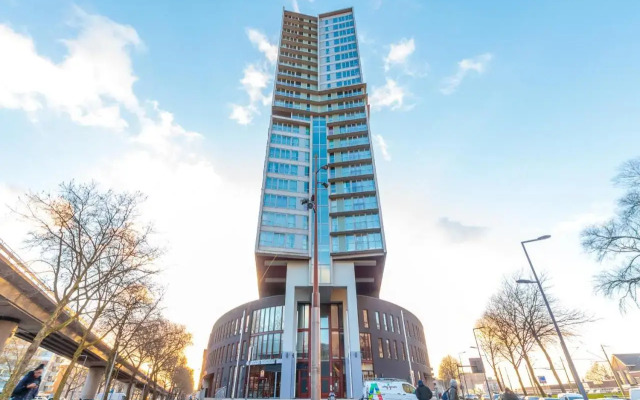 4-star
Art Hotel Rotterdam
Rotterdam
See live prices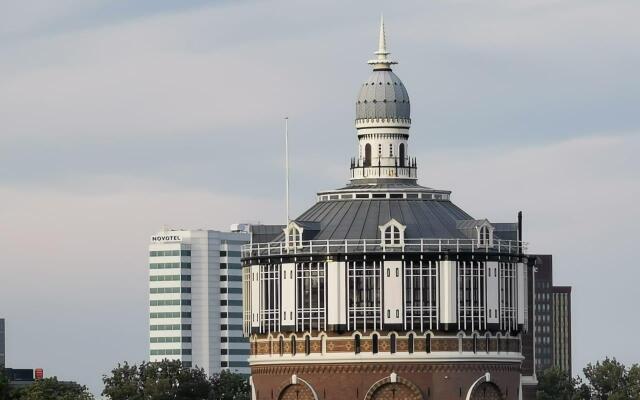 4-star
Novotel Rotterdam Brainpark
Rotterdam
See live pricesStays close to De Kuip (Stadion Feijenoord), with availability checked when we built this guide. Tap a hotel for live prices on your dates.
Getting there
Transport
Stadion (Feyenoord) railway station is directly beside the ground, with tram and bus links from central Rotterdam a short ride away. Matchday parking is limited around the stadium.
The area
Sits in the Feijenoord district of Rotterdam-Zuid on the south bank of the Nieuwe Maas, a working-class area central to the club's identity.
De Kuip (Stadion Feijenoord) · Rotterdam, Netherlands
Parking near De Kuip (Stadion Feijenoord)
The closest car parks to De Kuip (Stadion Feijenoord), each marked with a blue P on the map above. On event days public transport is usually quicker than driving.
- Q parkVan Zandvlietplein, Rotterdam135 m
- P8Olympiaweg 30A, Rotterdam187 m
- P7Rotterdam241 m
- Parkeergarage VerandaSiem Heidenstraat 6, Rotterdam454 m
- Parkeerplaats Sportcomplex OlympiaOlympiaweg 350, Rotterdam723 m
- Parkeergarage ColosseumwegColosseumweg 13, Rotterdam935 m
Frequently asked questions
What are the best seats at De Kuip (Stadion Feijenoord)?
For the best overall view, the central halfway-line blocks in the lower ring (first ring) along the Maastribune or Olympiatribune are the most prized, including premium sections such as Z2, Z3, W2 and W3. For the loudest atmosphere, Vak S behind the goal on the Gerard Meijer Tribune is the home support's heart. For premium comfort, the Maas Seats and Business Seats on the Maastribune are the standout hospitality options.
Where are the cheapest seats at De Kuip?
The most affordable seats are generally in the upper ring (second ring), which still offers a panoramic, elevated view of the whole pitch. Designated family vakken (such as F, H, CC, DD, OO and PP) also offer reduced prices for parents with children.
Where do away fans sit at De Kuip?
Visiting supporters are housed in the second ring of the Willem van Hanegem Tribune, in vakken GG and FF, with capacity for around 1,200 fans. For European matches, vak EE is sometimes added to give travelling clubs more space.
Where is the best atmosphere at De Kuip?
Vak S on the Gerard Meijer Tribune, behind the goal, is the most atmospheric section. It is home to Feyenoord's most dedicated supporters and was converted to a standing-style area specifically to enhance the noise and atmosphere.
Is De Kuip (Stadion Feijenoord) covered, and which seats are exposed to the weather?
Much of the bowl is under the roof that was extended in the 1994 renovation, but several open corner and end sections (the X, Y, Z and W areas) are uncovered and more exposed to wind and rain. If weather is a concern, choose a covered upper-ring block.
Is De Kuip accessible for wheelchair users?
Yes. De Kuip provides wheelchair and companion positions, typically in the lower tier, with stewards on hand to assist and accessible parking at P8. There is also a service office between the Olympiatribune and Gerard Meijer Tribune, plus provisions for senior and blind/partially-sighted supporters. Accessible match tickets should be arranged in advance through official Feyenoord channels.
What are the best seats for a concert at De Kuip?
With a stage usually at one end, the lower-ring long-side blocks on the Maastribune or Olympiatribune toward the stage give a clear side-on view without the distance or behind-stage angle of the far end. The standing floor offers proximity, while the far end stands behind the stage have the most restricted views.
How do section numbers work at De Kuip (Stadion Feijenoord)?
Section numbers at De Kuip (Stadion Feijenoord) follow the seating tiers. Lower ring (first ring) – long sides: Halfway-line blocks including premium sections Z2, Z3, W2, W3; Lower ring (first ring) – ends: Behind-goal blocks including Vak S (Gerard Meijer end); Upper ring (second ring): Upper-tier vakken wrapping the bowl; away vakken GG/FF (and sometimes EE) sit in the second ring of the Willem van Hanegem end; Maastribune business & premium tier: First tier (Maas Seats) and second tier (Business Seats) of the Maastribune.
Does De Kuip (Stadion Feijenoord) have a seating map with seat numbers?
Yes. De Kuip (Stadion Feijenoord)'s seating map is split into numbered sections across its tiers (Lower ring (first ring) – long sides Halfway-line blocks including premium sections Z2, Z3, W2, W3; Lower ring (first ring) – ends Behind-goal blocks including Vak S (Gerard Meijer end); Upper ring (second ring) Upper-tier vakken wrapping the bowl; away vakken GG/FF (and sometimes EE) sit in the second ring of the Willem van Hanegem end; Maastribune business & premium tier First tier (Maas Seats) and second tier (Business Seats) of the Maastribune), with individual seat numbers running within each section. Check the seating map on this page or the official chart for exact seat numbers.
What is the view like from the seats at De Kuip (Stadion Feijenoord)?
The best views at De Kuip (Stadion Feijenoord) are from Lower ring (first ring) central halfway-line blocks on the Maastribune or Olympiatribune (e.g. premium sections Z2, Z3, W2, W3) — Side-on at the halfway line gives the truest read of the game with the play balanced in front of you; these central long-side blocks are the most sought-after general seats in the ground. The weakest are Away end upper ring, Willem van Hanegem Tribune (vakken GG/FF, and EE when used): Furthest end from the Vak S home support, high in the second ring and a long way from the pitch; behind-goal angle compresses play at the far end. For a seat-by-seat view, see the view-from-seat photos and the seating map for De Kuip (Stadion Feijenoord).
Where should I sit at De Kuip (Stadion Feijenoord) with kids?
For families at De Kuip (Stadion Feijenoord), Lower or upper long-side blocks for tactics; family vakken (such as F, H, CC, DD, OO, PP) for families works best — Long-side seats let you see formation and shape clearly; designated reduced-price family vakken provide a calmer environment suited to parents with children.
What are the stands at De Kuip (Stadion Feijenoord)?
De Kuip (Stadion Feijenoord) is made up of 4 main stands: Lower ring (first ring) – long sides; Lower ring (first ring) – ends; Upper ring (second ring); Maastribune business & premium tier.
What is the view like from the seats at De Kuip (Stadion Feijenoord)?
For the best view at De Kuip (Stadion Feijenoord), aim for Lower ring (first ring) central halfway-line blocks on the Maastribune or Olympiatribune (e.g. premium sections Z2, Z3, W2, W3) (Side-on at the halfway line gives the truest read of the game with the play balanced in front of you; these central long-side blocks are the most sought-after general seats in the ground.); Upper ring (second ring) along the long sides (The elevated upper tier is among the most affordable seating yet delivers a panoramic, unobstructed view of the entire pitch, with much of it under the roof.). The view is most restricted from Away end upper ring, Willem van Hanegem Tribune (vakken GG/FF, and EE when used) (Furthest end from the Vak S home support, high in the second ring and a long way from the pitch; behind-goal angle compresses play at the far end.).
Where can I park at De Kuip (Stadion Feijenoord)?
Car parks near De Kuip (Stadion Feijenoord) include Q park, P8, P7, Parkeergarage Veranda and more. The closest is Q park, about 135 m from the venue. On event days public transport is usually quicker than driving, so check the transport options too.
More seating guides

Johan Cruijff ArenA
Amsterdam, Netherlands · Football stadium
Seating guide
Philips Stadion
Eindhoven, Netherlands · Football stadium
Seating guide
Ziggo Dome
Amsterdam, Netherlands · Arena
Seating guide
Estádio do Dragão
Porto, Portugal · Football stadium
Seating guide
Ibrox Stadium
Glasgow, Scotland · Football stadium
Seating guide
Allianz Stadium
Turin, Italy · Football stadium
Seating guidePopular seating guides

The O2 Arena
London, England · Arena
Seating guide
Wembley Stadium
London, England · Multi-sport stadium
Seating guide
Tottenham Hotspur Stadium
London, England · Football stadium
Seating guide
Old Trafford
Manchester, England · Football stadium
Seating guide
Anfield
Liverpool, England · Football stadium
Seating guide
AO Arena
Manchester, England · Arena
Seating guideAlso in Rotterdam
More to plan and book around Rotterdam, all on Event Escapes.
Sources
- De Kuip – Stadium Floor Plan (official, dekuip.com)
- Feyenoord – Stadionplattegrond / seating plan (official)
- De Kuip – Wikipedia
- Voetbalexperience – De Kuip stadium guide
- Voetbalstadion.net – De Kuip (Feyenoord Rotterdam)
Hero image: Vincenzo.togni, CC BY-SA 4.0 — via Wikimedia Commons