




 View photos
Ibrox Stadium Seating Plan
Your seating map and chart: where to sit, the best seats and the view from your seat
“Ibrox”
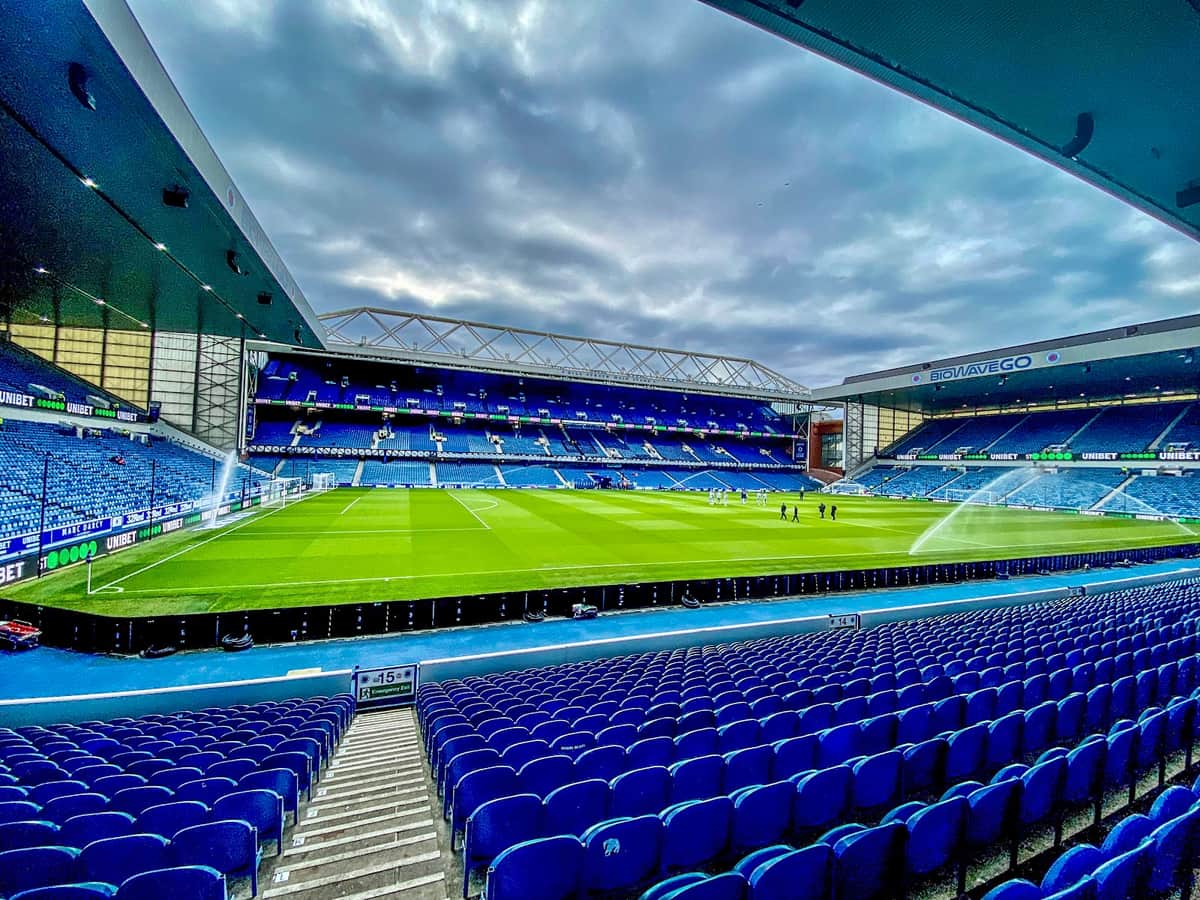
Ibrox Stadium in photos
4 outside · 2 inside the venue
Where to sit at Ibrox Stadium
The best seats at Ibrox Stadium are Bill Struth Main Stand rear tier / Club Deck, and Sandy Jardine Stand rear upper tier, around the halfway line for the view. For value, choose Copland Road Stand and Broomloan Road Stand (behind the goals), particularly the lower and mid rear tiers. For atmosphere, head to Copland Road Stand (home singing end), lower and rear tiers. Avoid Front rows of the Copland Road and Broomloan Road ends (behind the goals). Ibrox Stadium seats 51,700, home of Rangers FC.
Bill Struth Main Stand rear tier / Club Deck, and Sandy Jardine Stand rear upper tier, around the halfway line
Elevated, side-on, central positions give the most balanced TV-style view of the whole pitch under full roof cover.
Full detail Best valueCopland Road Stand and Broomloan Road Stand (behind the goals), particularly the lower and mid rear tiers
The end stands are generally cheaper than the side stands while still offering a solid, covered view and the most vocal atmosphere.
Full detail Best atmosphereCopland Road Stand (home singing end), lower and rear tiers
Traditionally the loudest part of Ibrox, especially for Old Firm derbies and European fixtures, where the noise behind the east goal is at its peak.
Full detail Where to avoidFront rows of the Copland Road and Broomloan Road ends (behind the goals)
Low eye level and a behind-goal angle make it harder to judge play at the far end of the pitch.
Full detailAbout Ibrox Stadium
Ibrox Stadium is the home of Rangers FC and one of the largest football grounds in Scotland, with an all-seater capacity of around 51,700. It is formed of four covered, continuous stands: the three-tiered Bill Struth Main Stand (south, including the elevated Club Deck), the two-tiered Sandy Jardine Stand (north, formerly the Govan Stand), the Copland Road Stand (east) and the Broomloan Road Stand (west). The best elevated, halfway-line views come from the Main Stand and the rear of the Sandy Jardine Stand, while the Copland Road Stand behind the goal is the loudest, most atmospheric area and tends to offer the best value. Away supporters are housed in the lower tier of the Broomloan Road Stand, towards the Sandy Jardine corner. Exact block numbering varies by source, so always confirm against the official Rangers ticketing map when booking.
A roughly 50,000-capacity ground defined by its category-B listed red-brick Bill Struth Main Stand, an Archibald Leitch design with a classical façade. The three modern bowl-like ends contrast with that heritage frontage.
Seating plan & map
General seating reference for Ibrox Stadium. Check your selected event for its exact configuration.
How the venue is set up
Scottish Premiership football (Rangers FC)
Primary use. Standard all-seater football configuration across all four stands at roughly 51,700. Home support fills most of the ground; the Copland Road Stand behind the east goal is the traditional singing/atmosphere end. Away fans are allocated the lower Broomloan Road Stand towards the Sandy Jardine corner (typically around 2,500 tickets, reduced for Celtic fixtures).
European and cup football
UEFA competition matches, Scottish Cup and League Cup ties use the same all-seater bowl. Away allocations and segregation lines can shift for these games, and the atmosphere (particularly in the Copland Road and Broomloan ends) is often at its most intense for European nights and Old Firm derbies.
Scotland internationals and major finals
Ibrox has historically hosted Scotland national-team fixtures and Scottish Cup Finals. For neutral or showpiece matches the ground is typically split or fully open as a single bowl rather than along club home/away lines.
Concerts and special events
The stadium has occasionally staged large concerts (past performers include Frank Sinatra, Elton John and Bon Jovi) and other events such as boxing and rugby sevens during the 2014 Commonwealth Games. For concerts a stage is usually erected at one end with a pitch standing/seated floor, which changes sightlines and means seats behind or beside the stage can be restricted.
Seating levels explained
Bill Struth Main Stand (incl. Club Deck)Lower and rear tiers plus Club Deck (third tier)
The largest and most historic stand, on Edmiston Drive, with a category-listed red-brick facade dating from 1929. It is the only three-tier stand at Ibrox, the upper Club Deck having been added in 1990-91. Holds in the region of 21,000 and houses the players' tunnel, dugouts and most hospitality.
Pros: Side-on halfway-line views, elevated TV-style angles from the Club Deck, full roof cover and the most premium facilities.
Cons: Higher-priced than the ends; the highest Club Deck rows are a long way back and steeply set; some heritage interior areas have a more traditional, tighter feel.
Sandy Jardine Stand (formerly Govan Stand)Front (lower) and Rear (upper) tiers
The two-tier stand opposite the Main Stand, completed in 1981 and renamed in honour of Sandy Jardine. Capacity is around 10,300. The rear upper tier sits high above the halfway line and is often rated one of the best vantage points in the ground.
Pros: Excellent elevated, central sightlines from the rear tier; opposite-side halfway views; modern hospitality nearby including the Blue Sky Lounge running its length.
Cons: Front-tier seats are lower and can feel further from the action; popular rear seats can be among the more expensive non-hospitality areas.
Copland Road StandFront (lower) and Rear (upper) tiers
The two-tier stand behind the east goal, completed in 1979, holding somewhere in the region of 8,000-9,500. This is the traditional home singing end and the loudest part of the ground, especially for derbies and European nights.
Pros: Best atmosphere, strong sense of being behind the goal, generally good value; the rear tier still offers a good elevated view down the pitch.
Cons: Behind-goal angle is less ideal for judging play at the far end; front rows are low; a vocal, standing-prone area that may not suit everyone.
Broomloan Road StandFront (lower) and Rear (upper) tiers; away fans in the lower tier
The two-tier stand behind the west goal, completed in 1980 and mirroring the Copland Road end, holding roughly 7,500-8,500. The lower tier towards the Sandy Jardine corner is the designated away section, below one of the large video screens.
Pros: Good behind-goal proximity and acoustics; the away section is widely praised for clear views and atmosphere; rear tier offers a decent elevated angle.
Cons: Behind-goal sightline; away fans are concentrated in one corner and can feel boxed in; corner seats lose some perspective on far-end play.
Best seats at Ibrox Stadium
Best overall view
Bill Struth Main Stand rear tier / Club Deck, and Sandy Jardine Stand rear upper tier, around the halfway line
Elevated, side-on, central positions give the most balanced TV-style view of the whole pitch under full roof cover.
Best value
Copland Road Stand and Broomloan Road Stand (behind the goals), particularly the lower and mid rear tiers
The end stands are generally cheaper than the side stands while still offering a solid, covered view and the most vocal atmosphere.
Best atmosphere
Copland Road Stand (home singing end), lower and rear tiers
Traditionally the loudest part of Ibrox, especially for Old Firm derbies and European fixtures, where the noise behind the east goal is at its peak.
Best for away supporters
Broomloan Road Stand lower tier, towards the Sandy Jardine corner
This is the designated away allocation; the view of the pitch and the acoustics from this corner are widely rated as excellent.
Best for families
Designated family areas within the Copland Road Stand (confirm the current family zone on the official map)
Rangers operate family ticketing in this stand with a friendlier atmosphere and family pricing; exact blocks vary by season.
Best for a premium / hospitality experience
Blue Sky Lounge (Sandy Jardine Stand) and Club Deck / Main Stand hospitality seats
Panoramic pitch-length views, padded central seating and full matchday hospitality with dining and lounge access.
| For | Sections | Why |
|---|---|---|
| Best overall view | Bill Struth Main Stand rear tier / Club Deck, and Sandy Jardine Stand rear upper tier, around the halfway line | Elevated, side-on, central positions give the most balanced TV-style view of the whole pitch under full roof cover. |
| Best value | Copland Road Stand and Broomloan Road Stand (behind the goals), particularly the lower and mid rear tiers | The end stands are generally cheaper than the side stands while still offering a solid, covered view and the most vocal atmosphere. |
| Best atmosphere | Copland Road Stand (home singing end), lower and rear tiers | Traditionally the loudest part of Ibrox, especially for Old Firm derbies and European fixtures, where the noise behind the east goal is at its peak. |
| Best for away supporters | Broomloan Road Stand lower tier, towards the Sandy Jardine corner | This is the designated away allocation; the view of the pitch and the acoustics from this corner are widely rated as excellent. |
| Best for families | Designated family areas within the Copland Road Stand (confirm the current family zone on the official map) | Rangers operate family ticketing in this stand with a friendlier atmosphere and family pricing; exact blocks vary by season. |
| Best for a premium / hospitality experience | Blue Sky Lounge (Sandy Jardine Stand) and Club Deck / Main Stand hospitality seats | Panoramic pitch-length views, padded central seating and full matchday hospitality with dining and lounge access. |
Seats to avoid & obstructed views
Front rows of the Copland Road and Broomloan Road ends (behind the goals): Low eye level and a behind-goal angle make it harder to judge play at the far end of the pitch.
Far corners where the Broomloan and Sandy Jardine stands meet (including the away corner): Acute corner angle reduces perspective on far-side and far-end action.
Highest rear rows of the Club Deck (top of the Main Stand): A long way back and high up; while the view is broad, players can look distant and access involves a steep climb.
Seats beside or behind the stage for concert configurations: For concerts a stage at one end creates restricted or side-on views and obstructed sightlines for nearby seats.
Rows immediately behind any roof support or stand junction (check the official map): A small number of seats near structural junctions may have a partially restricted view; these should be marked when booking.
Accessibility & companion seating
Rangers provide one of the best accessibility offers in the Scottish Premiership, with around 150 wheelchair-accessible spaces (reported as the highest in the league) plus companion/carer seating, an award-winning sensory room, audio descriptive commentary, induction loops, accessible toilets, lifts, step-free routes, drop-off points and accessible parking (permit required). Trained Access Stewards are on hand on matchdays. Accessible tickets, including a companion/carer seat, are booked through the Rangers Ticket Centre rather than general sale, and supporters should contact the club's disability access team in advance to confirm current provision.
Where: Wheelchair spaces are distributed across multiple areas, reported to include Copland Front (around 30), the East and West Enclosures (around 35 and 68 respectively), the Broomloan Stand (around 4), the Blue Sky Lounge (around 6) and the Sandy Jardine north-west corner (around 7 spaces reserved for visiting fans). Companion seats sit alongside wheelchair positions. Exact locations and counts can change, so confirm with the club when booking.
Food & drink at Ibrox Stadium
Kiosks throughout Ibrox's concourses serve hot and cold drinks, food and snacks on matchday, with Black Rooster trading in the Sandy Jardine Rear concourse and on the stadium footprint outside. Across the road at Edmiston House, the Rangers Fan Zone opens from midday with a bar, food stalls and live entertainment — free entry with a match ticket — alongside the Edmiston House Café from 10.30am.
Ibrox is a cashless venue — all kiosks accept card payments only.
Worth seeking out
- Black Rooster in the Sandy Jardine Rear concourse
- Fan Zone bar and food stalls at Edmiston House
- Edmiston House Café, open from 10.30am
Book with Event Escapes
Going to Ibrox Stadium? Tickets & hotels, sorted
The guide tells you where to sit — this is where you book it. Live-priced tickets and stays near the venue, all on Event Escapes.
Fixtures & tickets at Ibrox Stadium
All upcoming events at Ibrox Stadium
Rangers FC vs Kilmarnock FC
Sat, 10 Oct 2026 · Scottish Premiership
Rangers FC vs St. Johnstone
Sat, 24 Oct 2026 · EFL Cup
Rangers FC vs Aberdeen FC
Sat, 31 Oct 2026 · EFL Cup
Rangers FC vs Falkirk FC
Sat, 28 Nov 2026 · EFL Cup
Rangers FC vs Dundee United
Wed, 2 Dec 2026 · EFL Cup
Rangers FC vs Heart of Midlothian
Sat, 19 Dec 2026 · EFL Cup
Hotels near Ibrox Stadium
All hotels & live prices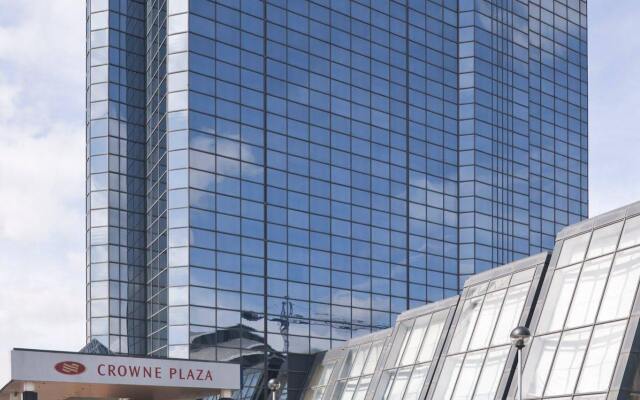 4-star
Crowne Plaza Hotel Glasgow by IHG
Glasgow
See live prices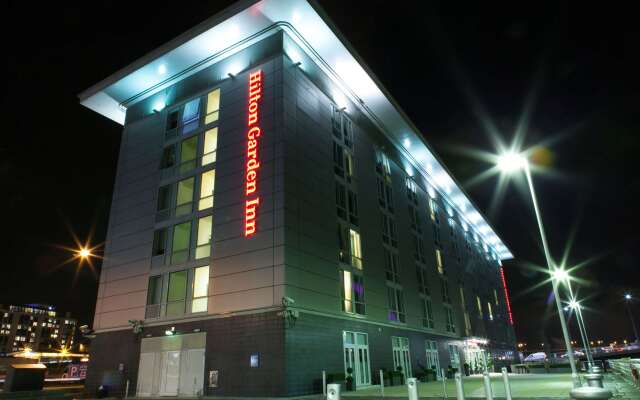 4-star
Hilton Garden Inn Glasgow City Centre
Glasgow
See live prices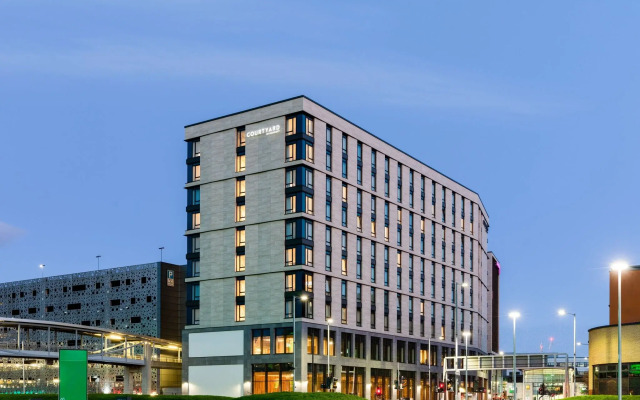 4-star
Courtyard by Marriott Glasgow SEC
Glasgow
See live pricesStays close to Ibrox Stadium, with availability checked when we built this guide. Tap a hotel for live prices on your dates.
Getting there
Transport
Ibrox station on the Glasgow Subway is right beside the ground, a couple of minutes' walk. It is well served from the city centre; matchday parking is restricted.
The area
Sits in the Ibrox/Govan area of southwest Glasgow, south of the River Clyde and near the Govan shipyards heritage.
Ibrox Stadium · Glasgow, Scotland
Parking near Ibrox Stadium
The closest car parks to Ibrox Stadium, each marked with a blue P on the map above. On event days public transport is usually quicker than driving.
- 150 Edmiston Drive Parking150 Edmiston Drive, Glasgow82 m
- Albion Car ParkEdmiston Drive, Glasgow308 m
- Car ParkBirkmyre Road, Glasgow550 m
- YourParkingSpaceAsda Govan Superstore, 500 Helen Street, Glasgow719 m
- JustParkSt, 500 Helen Street, Glasgow895 m
- YourParkingSpaceGovan Cross Shopping Centre, Glasgow1.1 km
Frequently asked questions
What are the best seats at Ibrox Stadium?
For the best all-round view, choose the rear tier of the Bill Struth Main Stand or the Club Deck, or the rear upper tier of the Sandy Jardine Stand, all around the halfway line. These elevated, side-on positions give a balanced TV-style view of the whole pitch under cover. For atmosphere over sightline, the Copland Road Stand behind the east goal is the place to be.
Where are the cheapest seats at Ibrox?
The best value is usually behind the goals in the Copland Road Stand (east) and Broomloan Road Stand (west). The two end stands tend to be cheaper than the side stands while still offering a covered view and the most vocal support. Prices vary by fixture category, so check the official Rangers ticketing site.
Where do away fans sit at Ibrox Stadium?
Away supporters are housed in the lower tier of the Broomloan Road Stand, towards the Sandy Jardine corner, below one of the large video screens. Rangers typically allocate around 2,500 away tickets, increased for some cup games and reduced (to around 2,000) for matches against Celtic. The view and acoustics from this section are widely rated as excellent.
Which is the best stand for atmosphere at Ibrox?
The Copland Road Stand behind the east goal is the traditional home singing end and the loudest part of the ground, especially for Old Firm derbies and European nights. The Broomloan end and the lower tiers generally generate the most noise.
Is Ibrox Stadium accessible for wheelchair users?
Yes. Rangers provide around 150 wheelchair-accessible spaces (reported as the most in the Scottish Premiership) plus companion seating, an award-winning sensory room, audio commentary, induction loops, accessible toilets, lifts, step-free routes and accessible parking (permit required). Accessible tickets are booked through the Rangers Ticket Centre rather than general sale; contact the club's access team in advance.
Does Ibrox Stadium have a roof and are seats covered?
Yes, all four stands are fully covered, so seats are generally protected from rain. As an all-seater bowl with continuous stands, the great majority of positions are sheltered, though wind can still reach the lower front rows in exposed weather.
What is the capacity of Ibrox Stadium?
Ibrox holds approximately 51,700 as an all-seater stadium, making it one of the largest football grounds in Scotland. Capacity has shifted slightly in recent seasons (recent figures have been quoted around 50,900 to 51,700) following accessibility and seating changes, so the official figure can vary by source and season.
Which seats are best for concerts at Ibrox Stadium?
The stadium has occasionally staged large concerts (past performers include Frank Sinatra, Elton John and Bon Jovi) and other events such as boxing and rugby sevens during the 2014 Commonwealth Games. For concerts a stage is usually erected at one end with a pitch standing/seated floor, which changes sightlines and means seats behind or beside the stage can be restricted.
How do section numbers work at Ibrox Stadium?
Section numbers at Ibrox Stadium follow the seating tiers. Bill Struth Main Stand (incl. Club Deck): Lower and rear tiers plus Club Deck (third tier); Sandy Jardine Stand (formerly Govan Stand): Front (lower) and Rear (upper) tiers; Copland Road Stand: Front (lower) and Rear (upper) tiers; Broomloan Road Stand: Front (lower) and Rear (upper) tiers; away fans in the lower tier.
Does Ibrox Stadium have a seating plan with seat numbers?
Yes. Ibrox Stadium's seating plan is split into numbered sections across its tiers (Bill Struth Main Stand (incl. Club Deck) Lower and rear tiers plus Club Deck (third tier); Sandy Jardine Stand (formerly Govan Stand) Front (lower) and Rear (upper) tiers; Copland Road Stand Front (lower) and Rear (upper) tiers; Broomloan Road Stand Front (lower) and Rear (upper) tiers; away fans in the lower tier), with individual seat numbers running within each section. Check the seating plan on this page or the official chart for exact seat numbers.
What is the view like from the seats at Ibrox Stadium?
The best views at Ibrox Stadium are from Bill Struth Main Stand rear tier / Club Deck, and Sandy Jardine Stand rear upper tier, around the halfway line — Elevated, side-on, central positions give the most balanced TV-style view of the whole pitch under full roof cover. The weakest are Front rows of the Copland Road and Broomloan Road ends (behind the goals): Low eye level and a behind-goal angle make it harder to judge play at the far end of the pitch. For a seat-by-seat view, see the view-from-seat photos and the seating plan for Ibrox Stadium.
Where should I sit at Ibrox Stadium with kids?
For families at Ibrox Stadium, Designated family areas within the Copland Road Stand (confirm the current family zone on the official map) works best — Rangers operate family ticketing in this stand with a friendlier atmosphere and family pricing; exact blocks vary by season. Note that the Bill Struth Main Stand (incl. Club Deck) is steep, so young children and anyone uneasy with heights are better lower down.
What are the stands at Ibrox Stadium?
Ibrox Stadium is made up of 4 main stands: Bill Struth Main Stand (incl. Club Deck); Sandy Jardine Stand (formerly Govan Stand); Copland Road Stand; Broomloan Road Stand.
What is the view like from the seats at Ibrox Stadium?
For the best view at Ibrox Stadium, aim for Bill Struth Main Stand rear tier / Club Deck, and Sandy Jardine Stand rear upper tier, around the halfway line (Elevated, side-on, central positions give the most balanced TV-style view of the whole pitch under full roof cover.); Copland Road Stand and Broomloan Road Stand (behind the goals), particularly the lower and mid rear tiers (The end stands are generally cheaper than the side stands while still offering a solid, covered view and the most vocal atmosphere.). The view is most restricted from Front rows of the Copland Road and Broomloan Road ends (behind the goals) (Low eye level and a behind-goal angle make it harder to judge play at the far end of the pitch.).
Where can I park at Ibrox Stadium?
Car parks near Ibrox Stadium include 150 Edmiston Drive Parking, Albion Car Park, Car Park, YourParkingSpace and more. The closest is 150 Edmiston Drive Parking, about 82 m from the venue. On event days public transport is usually quicker than driving, so check the transport options too.
More seating guides

Hampden Park
Glasgow, Scotland · Football stadium
Seating guide
Celtic Park
Glasgow, Scotland · Football stadium
Seating guide
OVO Hydro
Glasgow, Scotland · Arena
Seating guide
P&J Live
Aberdeen, Scotland · Arena
Seating guide Photo: Jamshaid Ali / Google Maps
Allianz Arena
Munich, Germany · Football stadium
Seating guide
Old Trafford
Manchester, England · Football stadium
Seating guidePopular seating guides

The O2 Arena
London, England · Arena
Seating guide
Wembley Stadium
London, England · Multi-sport stadium
Seating guide
Tottenham Hotspur Stadium
London, England · Football stadium
Seating guide
Anfield
Liverpool, England · Football stadium
Seating guide
AO Arena
Manchester, England · Arena
Seating guide
Barclays Center
Brooklyn, USA · Arena
Seating guideAlso in Glasgow
More to plan and book around Glasgow, all on Event Escapes.
Sources
- Rangers Football Club - Hospitality (Official)
- Rangers Football Club - Disabled Access (Official)
- Ibrox Stadium - Wikipedia
- Ibrox Stadium | Glasgow Rangers FC | Scottish Football Ground Guide
- Ibrox Stadium Seating Plan - ticket-compare
Hero image: Lesterhobbes764, CC BY-SA 4.0 — via Wikimedia Commons