




 View photos
Palau Sant Jordi Seating Map
Your seating plan and chart: where to sit, the best seats and the view from your seat
Palau Sant Jordi in photos
2 outside · 7 inside the venue
Where to sit at Palau Sant Jordi
The best seats at Palau Sant Jordi are Grada Inferior (lower stand) blocks facing the stage for the view. For value, choose Lower rows of the Grada Superior facing the stage. Avoid Grada Superior blocks behind an end stage. Palau Sant Jordi seats 17,960.
Grada Inferior (lower stand) blocks facing the stage
Seated, close and front-on to an end stage.
Full detail Best valueLower rows of the Grada Superior facing the stage
Affordable elevated seats before the highest rows.
Full detail Where to avoidGrada Superior blocks behind an end stage
Little or no view of the stage front; usually withheld for concerts.
Full detailAbout Palau Sant Jordi
The Palau Sant Jordi seats about 17,960 for concerts and around 16,000-17,000 for sport, with an even higher maximum when a standing floor is used for the largest shows. Seating rises around the floor (pista) through lower and upper stands (gradas), and the best concert views come from the lower stands facing an end stage and the front of the floor. The upper stands climb steeply, so the highest and behind-stage blocks feel distant. A flexible Olympic venue, it hosts major concerts, basketball, tennis and international sport.
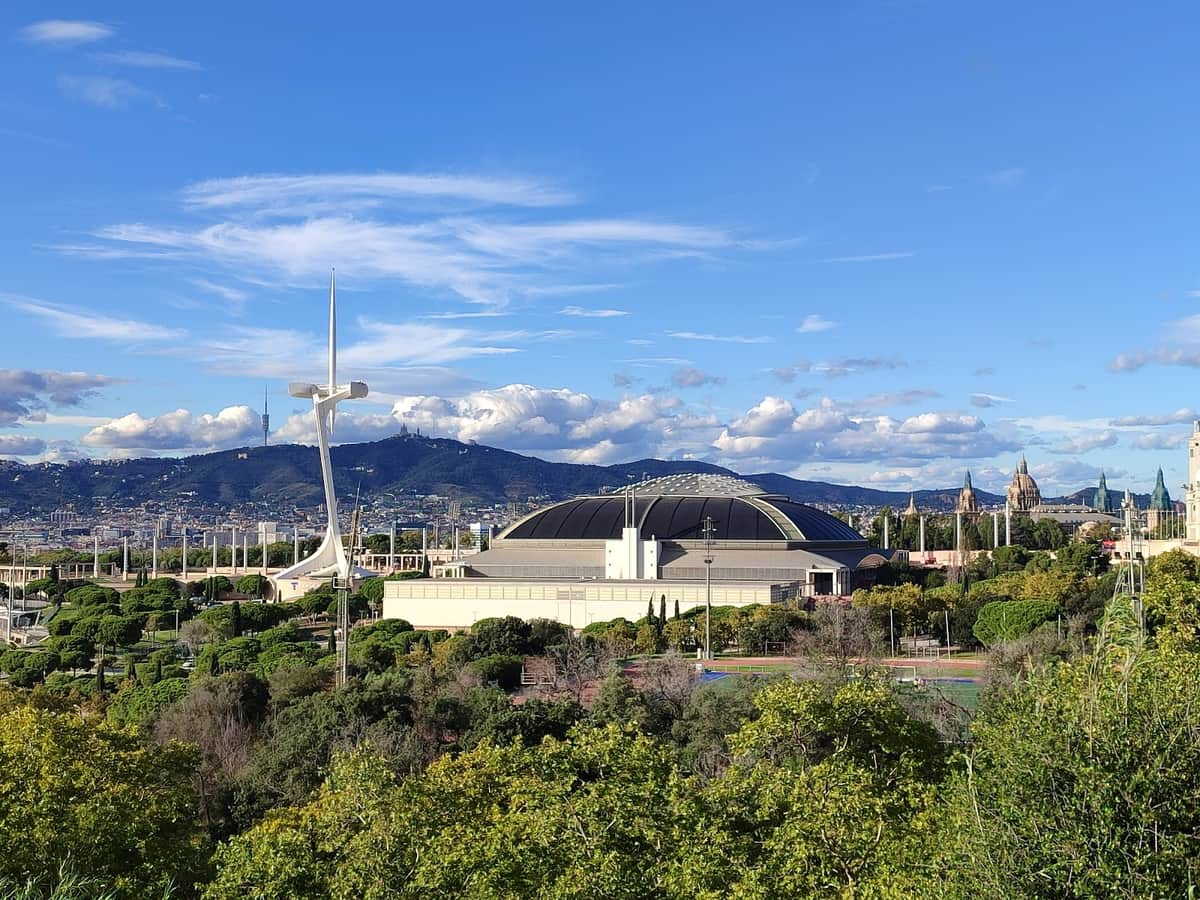
Designed by Japanese architect Arata Isozaki and opened in 1990 for the 1992 Barcelona Olympics, the Palau Sant Jordi is a landmark indoor arena on Montjuïc hill, famous for its sweeping, undulating domed roof that was assembled on the ground and lifted into place. Part of the Anella Olímpica, it is a highly flexible multi-purpose hall used for sport, concerts and major events.
Seating plan & map
This is the map used for ticket sales at Palau Sant Jordi. Exact configuration varies by event.
How the venue is set up
End-stage concert
Stage at one end with a standing or seated floor plus the stands; behind-stage upper blocks are cut from sale, with a high maximum when the floor is standing.
Sport (basketball / handball)
Central court with seating around the sides and one end, around 16,000-17,000.
In-the-round / other
Central stage or reconfigured layouts using the hall's flexible seating.
Seating levels explained
Floor / PistaFloor blocks
The flat floor in front of an end stage, standing for many concerts or seated for others.
Pros: Closest to the stage and the heart of the atmosphere.
Cons: Flat floor limits views behind a tall standing crowd.
Lower Stand / Grada InferiorLower numbered blocks
The first ring of seating around and above the floor.
Pros: Strong sightlines, especially blocks facing an end stage.
Cons: Side blocks lose part of the stage; front rows sit low.
Upper Stand / Grada SuperiorUpper numbered blocks
The steep upper stands wrapping the top of the bowl under the great domed roof.
Pros: Elevated overview of the stage and production for less money.
Cons: High, distant view from the back rows.
Premium / VIPVIP zones and boxes
VIP areas and premium seating with hospitality access.
Pros: Comfort, central views and private facilities.
Cons: Limited availability at this Olympic-era venue.
Best seats at Palau Sant Jordi
Best overall for concerts
Grada Inferior (lower stand) blocks facing the stage
Seated, close and front-on to an end stage.
Closest to the stage / floor
Front of the floor (pista)
Right at the barrier for the most immersive experience.
Best value
Lower rows of the Grada Superior facing the stage
Affordable elevated seats before the highest rows.
Seated with a full view
Central Grada Inferior, a few rows up
Elevated enough to clear the floor crowd, head-on to the stage.
Best for sport
Grada Inferior along the sidelines near centre
Close, central views of the full court or floor.
| For | Sections | Why |
|---|---|---|
| Best overall for concerts | Grada Inferior (lower stand) blocks facing the stage | Seated, close and front-on to an end stage. |
| Closest to the stage / floor | Front of the floor (pista) | Right at the barrier for the most immersive experience. |
| Best value | Lower rows of the Grada Superior facing the stage | Affordable elevated seats before the highest rows. |
| Seated with a full view | Central Grada Inferior, a few rows up | Elevated enough to clear the floor crowd, head-on to the stage. |
| Best for sport | Grada Inferior along the sidelines near centre | Close, central views of the full court or floor. |
Seats to avoid & obstructed views
Grada Superior blocks behind an end stage: Little or no view of the stage front; usually withheld for concerts.
Highest rows of the Grada Superior: High and distant under the roof, relying on the screens.
Lower blocks directly beside the stage: Sharp side-on angle with possible staging obstruction.
Corner blocks for end-stage shows: Angled views that cut off part of the stage.
Accessibility & companion seating
The Palau Sant Jordi provides wheelchair-accessible spaces and easy-access seating with accessible toilets and step-free routes, and offers assistance for disabled visitors arranged in advance. Accessible tickets are booked through the venue or promoter's dedicated service rather than general sale.
Where: Wheelchair positions are located at accessible levels of the lower bowl with step-free access.
Food & drink at Palau Sant Jordi
Catering at Palau Sant Jordi is functional rather than fancy: bars inside the main hall and the adjoining Sant Jordi Club open when doors open and serve until the end of the event. The offer centres on hot and cold sandwiches, snacks and drinks, and the venue states that vegetarian and gluten-free products are stocked. Montjuïc is fairly isolated, so options immediately outside the venue are limited.
Worth seeking out
- Hot and cold sandwiches at the concourse bars
- Vegetarian and gluten-free products stocked
- Bars open from doors until the event ends
Book with Event Escapes
Going to Palau Sant Jordi? Tickets & hotels, sorted
The guide tells you where to sit — this is where you book it. Live-priced tickets and stays near the venue, all on Event Escapes.
Fixtures & tickets at Palau Sant Jordi


All upcoming events at Palau Sant Jordi
Pitbull-Barcelona, Spain
Wed, 4 Nov 2026 · Concerts
Bryan Adams-Barcelona, Spain
Sat, 14 Nov 2026 · Concerts
Olivia Rodrigo-Barcelona, Spain
Sat, 1 May 2027 · Concerts
Olivia Rodrigo-Barcelona, Spain
Sun, 2 May 2027 · Concerts
Olivia Rodrigo-Barcelona, Spain
Wed, 5 May 2027 · Concerts
Olivia Rodrigo-Barcelona, Spain
Thu, 6 May 2027 · Concerts
Hotels near Palau Sant Jordi
All hotels & live prices 5-star
InterContinental Barcelona by IHG
Barcelona
See live prices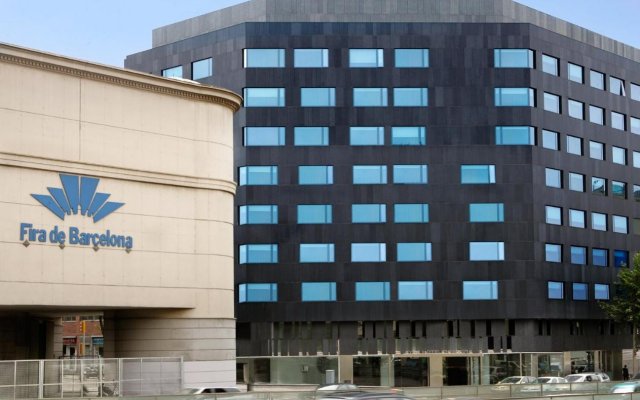 4-star
Hotel Indigo Barcelona Plaza Espana by IHG
Barcelona
See live prices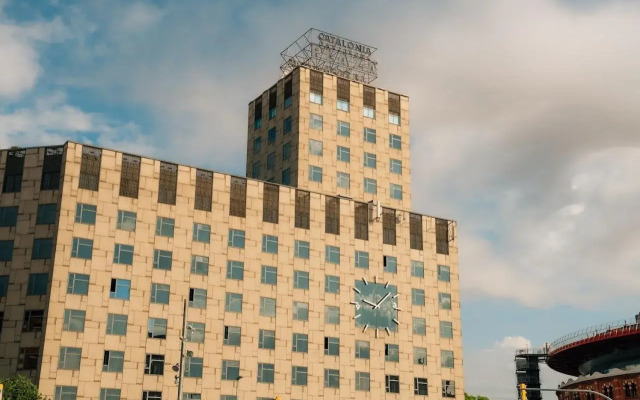 4-star
Catalonia Barcelona Plaza
Barcelona
See live pricesStays close to Palau Sant Jordi, with availability checked when we built this guide. Tap a hotel for live prices on your dates.
Getting there
Transport
The arena sits on Montjuïc within the Olympic Ring; the nearest Metro is Espanya (lines 1, 3 and 8) followed by a walk up the hill via the escalators, or you can take the Funicular de Montjuïc from Paral·lel. Bus 150 runs up the hill close to the venue, and parking is limited on event days.
The area
It stands on Montjuïc among the Olympic-era venues, next to the Estadi Olímpic and close to the Palau Nacional (MNAC) and the Magic Fountain of Montjuïc. The hilltop setting is more parkland and museums than nightlife, with the city centre a short Metro or funicular ride away.
Palau Sant Jordi · Barcelona, Spain
Parking near Palau Sant Jordi
The closest car parks to Palau Sant Jordi, each marked with a blue P on the map above. On event days public transport is usually quicker than driving.
- Aparcament Mercaderies EstadiMontjuïc243 m
- AparcamentPasseig Olímpic, 1, Barcelona297 m
- 🅿️ Piscines Bernat PicornellAvinguda de l'Estadi, 30, Barcelona328 m
- Acceso parking BotanicoMontjuïc366 m
- Aparcament Palau Sant JordiCarrer del Foc, 1411, Barcelona390 m
- AparcamentMontjuïc415 m
Frequently asked questions
What is the capacity of the Palau Sant Jordi?
About 17,960 seated for concerts and roughly 16,000-17,000 for sport, with a higher maximum when a standing floor is used.
What are the best seats for a concert?
Lower stand (Grada Inferior) blocks facing an end stage for a seated view, or the front of the floor for immersion.
How do I get there?
It is on Montjuïc; take the Metro to Espanya (lines 1, 3 and 8) and walk up the escalators, use the Funicular de Montjuïc from Paral·lel, or bus 150.
What events are held there?
It hosts major concerts, basketball, handball and tennis, and was a main venue for the 1992 Barcelona Olympics.
Which seats should I avoid?
Upper stand (Grada Superior) blocks behind the stage and the highest rows, which are steep and distant.
Who designed the arena?
It was designed by Japanese architect Arata Isozaki and opened in 1990 for the 1992 Olympics.
What is the bag policy?
Only small bags are permitted and all bags are searched on entry; large bags and rucksacks are not allowed inside.
How do section numbers work at Palau Sant Jordi?
Section numbers at Palau Sant Jordi follow the seating tiers. Floor / Pista: Floor blocks; Lower Stand / Grada Inferior: Lower numbered blocks; Upper Stand / Grada Superior: Upper numbered blocks; Premium / VIP: VIP zones and boxes.
Does Palau Sant Jordi have a seating map with seat numbers?
Yes. Palau Sant Jordi's seating map is split into numbered sections across its tiers (Floor / Pista Floor blocks; Lower Stand / Grada Inferior Lower numbered blocks; Upper Stand / Grada Superior Upper numbered blocks; Premium / VIP VIP zones and boxes), with individual seat numbers running within each section. Check the seating map on this page or the official chart for exact seat numbers.
What is the view like from the seats at Palau Sant Jordi?
The best views at Palau Sant Jordi are from Grada Inferior (lower stand) blocks facing the stage — Seated, close and front-on to an end stage. The weakest are Grada Superior blocks behind an end stage: Little or no view of the stage front; usually withheld for concerts. For a seat-by-seat view, see the view-from-seat photos and the seating map for Palau Sant Jordi.
Where are the wheelchair-accessible seats at Palau Sant Jordi?
The Palau Sant Jordi provides wheelchair-accessible spaces and easy-access seating with accessible toilets and step-free routes, and offers assistance for disabled visitors arranged in advance. Accessible tickets are booked through the venue or promoter's dedicated service rather than general sale. Locations: Wheelchair positions are located at accessible levels of the lower bowl with step-free access..
What are the stands at Palau Sant Jordi?
Palau Sant Jordi is made up of 2 main stands: Floor / Pista; Premium / VIP.
What is the view like from the seats at Palau Sant Jordi?
For the best view at Palau Sant Jordi, aim for Grada Inferior (lower stand) blocks facing the stage (Seated, close and front-on to an end stage.); Front of the floor (pista) (Right at the barrier for the most immersive experience.). The view is most restricted from Grada Superior blocks behind an end stage (Little or no view of the stage front; usually withheld for concerts.).
Is Palau Sant Jordi covered, and does it have a roof?
The Palau Sant Jordi is a fully enclosed indoor arena covered by a permanent domed roof.
Where can I park at Palau Sant Jordi?
Car parks near Palau Sant Jordi include Aparcament Mercaderies Estadi, Aparcament, 🅿️ Piscines Bernat Picornell, Acceso parking Botanico and more. The closest is Aparcament Mercaderies Estadi, about 243 m from the venue. On event days public transport is usually quicker than driving, so check the transport options too.
More seating guides
 Photo: Md. Jarif Mahbub / Google Maps
Spotify Camp Nou
Barcelona, Spain · Football stadium
Seating guide Photo: Santiago Alvarez Mayo / Google Maps
WiZink Center
Madrid, Spain · Arena
Seating guide
Caja Mágica (Manolo Santana)
Madrid, Spain · Tennis stadium
Seating guide
Cívitas Metropolitano
Madrid, Spain · Football stadium
Seating guide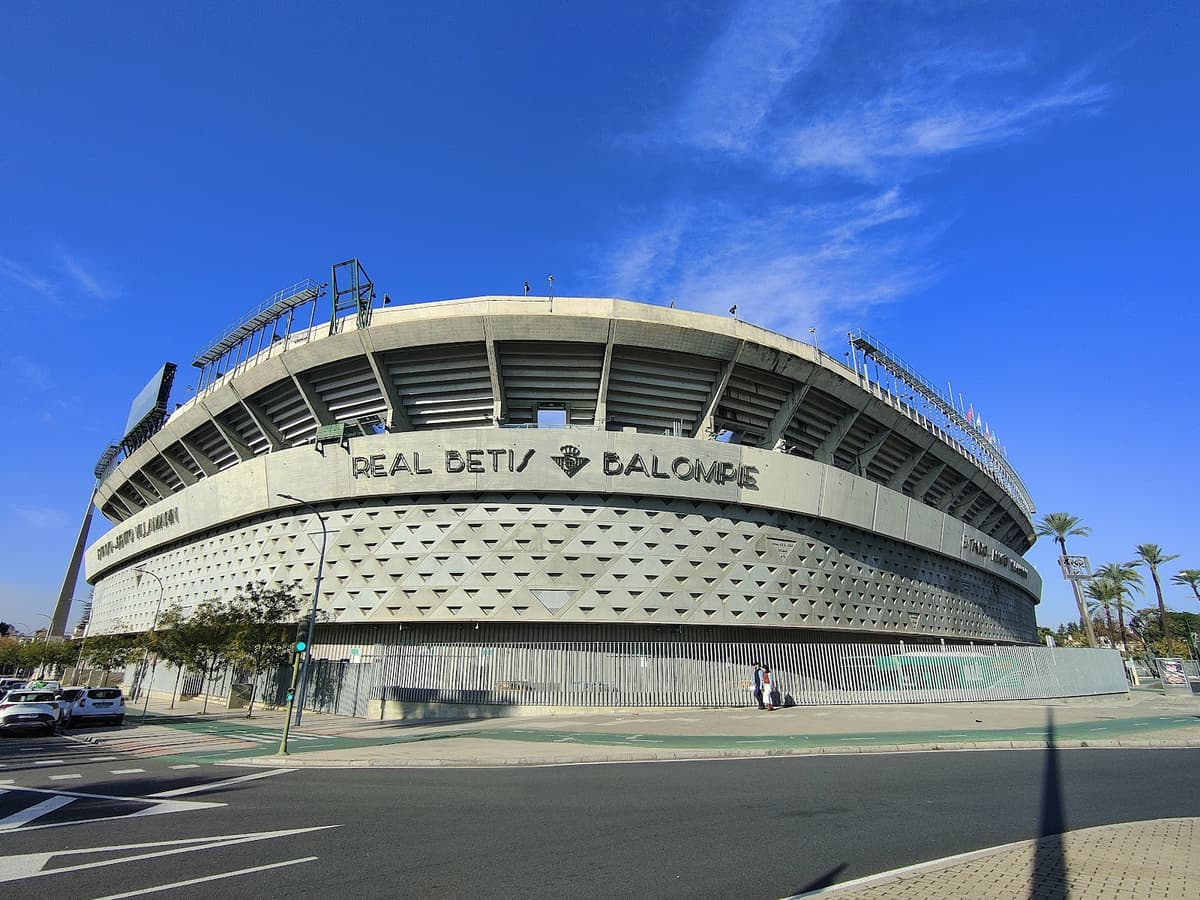
Estadio Benito Villamarín
Seville, Spain · Football stadium
Seating guide
Estadio de la Cerámica
Vila-real, Spain · Football stadium
Seating guidePopular seating guides

The O2 Arena
London, England · Arena
Seating guide
Wembley Stadium
London, England · Multi-sport stadium
Seating guide
Tottenham Hotspur Stadium
London, England · Football stadium
Seating guide
Old Trafford
Manchester, England · Football stadium
Seating guide
Anfield
Liverpool, England · Football stadium
Seating guide
Ibrox Stadium
Glasgow, Scotland · Football stadium
Seating guideAlso in Barcelona
More to plan and book around Barcelona, all on Event Escapes.
Sources
Hero image: Balou46, CC BY-SA 3.0 — via Wikimedia Commons