




 View photos
Estadio Azteca Seating Map
Your seating plan and chart: where to sit, the best seats and the view from your seat
“El Coloso de Santa Úrsula” · “La Catedral del Fútbol” · “The Cathedral of Football”
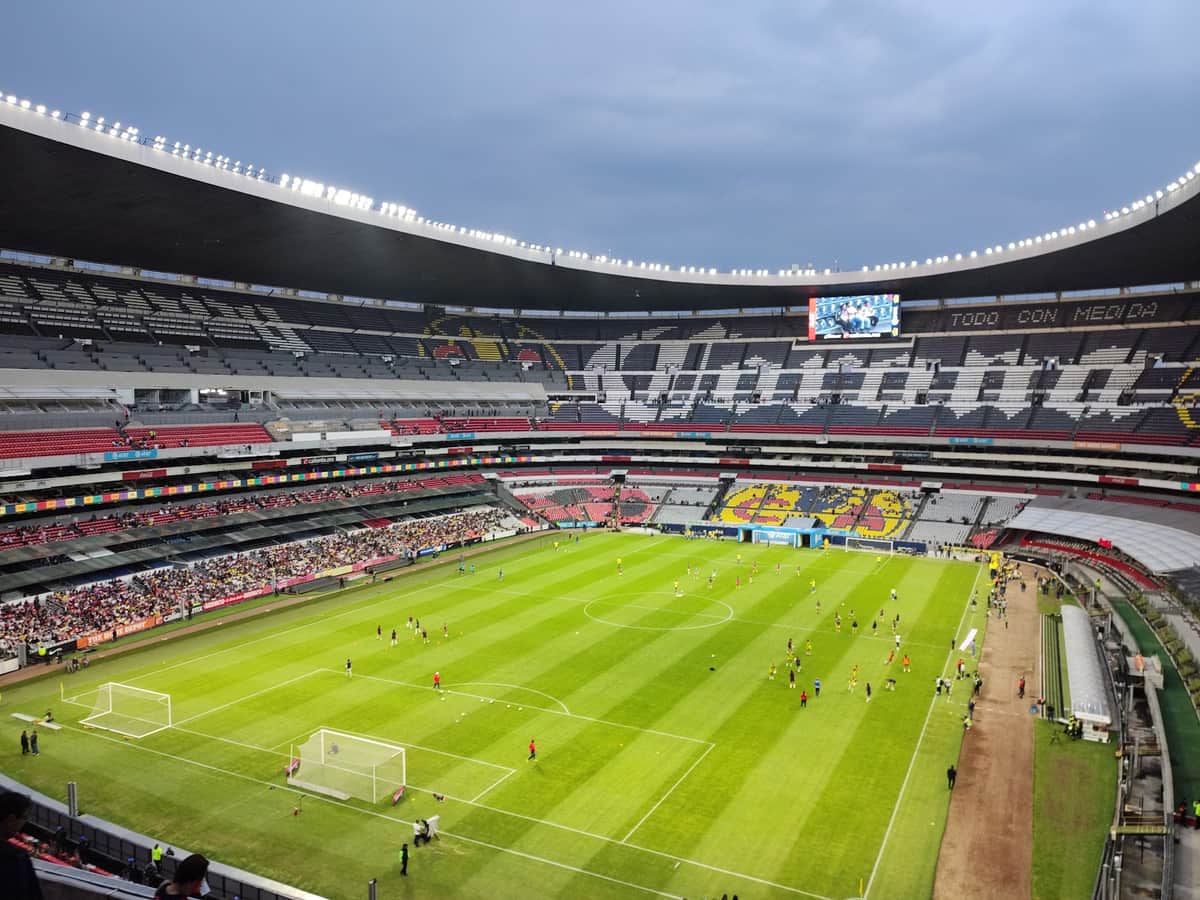
Estadio Azteca in photos
10 outside · 14 inside the venue
Where to sit at Estadio Azteca
The best seats at Estadio Azteca are Lateral 100 (west/Poniente) around the halfway line, mid rows for the view. For value, choose Lateral 300 upper sidelines. For atmosphere, head to Alto Norte / Cabecera Norte (north end). Avoid Cabecera 300 corners and Alto Sur/Norte upper corners. Estadio Azteca seats 87,523, home of Club América and Cruz Azul and Mexico national team.
Lateral 100 (west/Poniente) around the halfway line, mid rows
Closest to the pitch, roughly level with play, roof-covered and shaded — the most natural football sightline in the stadium.
Full detail Best valueLateral 300 upper sidelines
A fraction of lateral-100 prices but, thanks to the trackless bowl and steep rake, you still get a clean, complete tactical view of the whole pitch.
Full detail Best atmosphereAlto Norte / Cabecera Norte (north end)
La Monumental and the animación groups drive the singing from the north end; it is the loudest, most partisan block in the ground.
Full detail Where to avoidCabecera 300 corners and Alto Sur/Norte upper corners
Behind-goal upper corners give a flat, distant angle where the near goalmouth disappears and the far half compresses.
Full detailAbout Estadio Azteca
The Azteca's lower ring (level 100 — Lateral 100 down the sides, Norte 100 and Sur 100 behind the goals) gives you the closest, most level football; the sideline Lateral 100 seats around the halfway line are the best in the house. Above the lower ring sits the premium Plateas 200 band and then the near-continuous wall of palcos (executive boxes) that separates the decks. The upper ring — Lateral 300 and Cabecera 300, with Alto Norte and Alto Sur (the old level 400) at the very top — is where the value lies: it is steep and high, but the sightlines stay honest because the bowl points everything at the grass. Club América's hardcore support, led by La Monumental, packs the north end (historically the Cabecera Norte, now up in the Alto Norte), so that is the loud end; for World Cup 2026 the ground is branded 'Estadio Banorte' commercially but plays as 'Mexico City Stadium' under FIFA rules, with reserved seating and no barras. For concerts the pitch becomes a floor GA/seated area and one end is closed off behind the stage, at which point the covered western Lateral and Plateas offer the best mix of sound and sightline.
A vast, steep two-tier oval bowl sunk into the ground of southern Mexico City, wrapped by a ring of 856 executive boxes (palcos) slung between the lower and upper decks — the feature that defines the Azteca and pushes the top tier high and far back. There is no running track, so even the giant upper ring points straight at the pitch; the 2024–26 rebuild added a partial canopy with photovoltaic panels, new LED screens across the facade and a reworked pitch, while keeping the intimidating, near-vertical wall of noise the ground is famous for. It sits at roughly 2,240 m altitude, and the thin air is a genuine part of the experience for players and fans alike.
Seating plan & map
This is the map used for ticket sales at Estadio Azteca. Exact configuration varies by event.
How the venue is set up
Liga MX / domestic football
Full bowl for Club América (and, from 2026, Cruz Azul). La Monumental and the animación groups occupy the north end (Cabecera / Alto Norte); the rest is reserved seating across levels 100, 200, palcos and 300.
Mexico national team / World Cup 2026
Hosts the opening match (Mexico vs South Africa, 11 June 2026) plus further group games, a Round of 32 and a Round of 16 — five matches in all. Tournament capacity is trimmed to roughly 80,000–83,000 for media, broadcast and FIFA hospitality builds; barras are not permitted and seating is fully allocated.
Concerts (stadium shows)
End-stage layout with the stage typically at one cabecera; the pitch carries GA/seated floor blocks and the sections directly behind and beside the stage are killed or restricted. Covered western Lateral 100 and Plateas 200 give the best balance of view and sound.
Seating levels explained
Lower sidelineLateral 100 (west and east lower sidelines)
The lower ring down the long sides, closest to the touchline and roughly level with play. The prime midfield blocks here are the most sought-after non-hospitality seats in the stadium.
Pros: Closest, most natural football angle; you feel the pace and noise; western side is shaded and roof-covered.
Cons: Front rows sit low so distant play flattens out; premium pricing; eastern side catches afternoon sun.
Lower behind the goalNorte 100 and Sur 100
The lower cabeceras behind each goal. The north lower end is the traditional heartland of América's support before La Monumental was moved higher.
Pros: Close to the action and to at least one penalty box; strong end-of-ground atmosphere; keenly priced against the laterals.
Cons: Behind-goal angle compresses the far half; corners lose the near goalmouth.
Premium mid-ringPlateas 200 (with the ring of 856 palcos)
The elevated premium band and executive-box ring that sits between the lower and upper decks — central, covered and served by better concourses.
Pros: Elevated central sightline with roof cover; superior facilities; the tactical 'director's view' of the pitch.
Cons: Most palcos are long-term leased and hard to buy; the box front rails and recessed rows can nibble at the view from the back of a palco.
Upper sideline & endsLateral 300 (upper sidelines), Cabecera 300 (upper ends)
The main upper ring. The 300-level sidelines are the classic value seat — high and steep, but the whole pitch opens up beneath you.
Pros: Best value-for-view in the ground; complete tactical overview; the rake keeps you pointed at the grass.
Cons: High and steep; a long climb; behind-goal 300 corners flatten badly.
Uppermost / generalAlto Norte and Alto Sur
The very top of the bowl behind the goals — the cheapest seats and, in the Alto Norte, the current home of La Monumental and the loudest support.
Pros: Cheapest tickets; the loudest, most partisan atmosphere in the Alto Norte; a panoramic view of the whole stadium.
Cons: Highest and steepest; furthest from play; the altitude and the climb are felt; exposed edges catch weather and sun.
Premium hospitalityPremium Chairman, Corner Club, Locker Club, Tunnel Club, Super Seats, Sierra Porch
The rebuilt hospitality product — a mix of pitchside 'Super Seats' and tunnel-side seats, corner clubs and lounge access introduced with the 2024–26 renovation.
Pros: Best facilities, catering and access; pitchside proximity in the Super Seats and Tunnel Club; premium lounges out of the weather.
Cons: The most expensive tickets by far; some pitchside rows sit very low with a flat angle on the far side of the pitch.
Best seats at Estadio Azteca
Best overall view
Lateral 100 (west/Poniente) around the halfway line, mid rows
Closest to the pitch, roughly level with play, roof-covered and shaded — the most natural football sightline in the stadium.
Best value
Lateral 300 upper sidelines
A fraction of lateral-100 prices but, thanks to the trackless bowl and steep rake, you still get a clean, complete tactical view of the whole pitch.
Best atmosphere
Alto Norte / Cabecera Norte (north end)
La Monumental and the animación groups drive the singing from the north end; it is the loudest, most partisan block in the ground.
Best for the home end / ultras
Norte 100 and Alto Norte
The north cabecera is América's traditional supporters' end — behind-goal, banner-draped and relentless when the team attacks that way in the half the barra backs.
Best side-on alternative
Plateas 200 (central)
An elevated, covered, central mid-ring seat with the 'director's' tactical angle and better facilities than the lower ring, without going to the very top.
Best for concerts
Western Lateral 100 / Plateas 200 facing the stage
Covered, side-on to an end stage with the cleanest balance of sound and sightline, and clear of the killed sections behind and beside the stage.
| For | Sections | Why |
|---|---|---|
| Best overall view | Lateral 100 (west/Poniente) around the halfway line, mid rows | Closest to the pitch, roughly level with play, roof-covered and shaded — the most natural football sightline in the stadium. |
| Best value | Lateral 300 upper sidelines | A fraction of lateral-100 prices but, thanks to the trackless bowl and steep rake, you still get a clean, complete tactical view of the whole pitch. |
| Best atmosphere | Alto Norte / Cabecera Norte (north end) | La Monumental and the animación groups drive the singing from the north end; it is the loudest, most partisan block in the ground. |
| Best for the home end / ultras | Norte 100 and Alto Norte | The north cabecera is América's traditional supporters' end — behind-goal, banner-draped and relentless when the team attacks that way in the half the barra backs. |
| Best side-on alternative | Plateas 200 (central) | An elevated, covered, central mid-ring seat with the 'director's' tactical angle and better facilities than the lower ring, without going to the very top. |
| Best for concerts | Western Lateral 100 / Plateas 200 facing the stage | Covered, side-on to an end stage with the cleanest balance of sound and sightline, and clear of the killed sections behind and beside the stage. |
Seats to avoid & obstructed views
Cabecera 300 corners and Alto Sur/Norte upper corners: Behind-goal upper corners give a flat, distant angle where the near goalmouth disappears and the far half compresses.
Front rows of Lateral 100 behind the benches: Very low seats behind the technical areas — a flat angle on the far side and possible sightline interruption from staff, subs and photographers.
Top rows of Alto Norte / Alto Sur: The highest, steepest, furthest seats; a long climb, exposed edges, and the 2,240 m altitude is felt on the way up.
Back rows of the palcos ring: Recessed executive boxes: the box front rail and depth can clip the lower part of the pitch from the rearmost seats.
Sections behind/beside the stage for concerts: For end-stage shows the cabecera behind the stage and the deep side blocks are killed or heavily restricted — you see the back of the rig, not the show.
Accessibility & companion seating
The stadium provides designated wheelchair-and-companion positions, priced in line with the Cabecera 300 zone, plus accessible entrances, lifts to the premium levels and accessible washrooms; the 2024–26 rebuild upgraded step-free access and evacuation to FIFA World Cup standard. Book accessible places in advance as availability is limited.
Where: Dedicated accessible platforms with companion seating around the lower ring and cabecera areas; step-free routes and lifts serve the Plateas 200, palcos and premium levels.
Food & drink at Estadio Azteca
Rebuilt for the 2026 World Cup and reopened as Estadio Banorte, the ground offers a wider concession range than most Mexican stadiums: tacos, burritos, hot dogs, pizza, sandwiches and popcorn, with beer sold at the stands. As part of the renovation the operators have announced that fans will be able to order food, drinks and merchandise from their phones, although details of how the system works were still to be confirmed at the time of the announcement.
Worth seeking out
- Tacos and burritos at the concourse concessions
- Hot dogs, pizza, sandwiches and popcorn stands
- Mobile ordering of food and drink, introduced with the rebuild
Book with Event Escapes
Going to Estadio Azteca? Tickets & hotels, sorted
The guide tells you where to sit — this is where you book it. Live-priced tickets and stays near the venue, all on Event Escapes.
Fixtures & tickets at Estadio Azteca
All upcoming events at Estadio Azteca
To be decided vs CD Guadalajara
Sat, 19 Sept 2026 · Liga MX
Cruz Azul vs Toluca FC
Sat, 26 Sept 2026 · Liga MX
Elton John-Mexico CIty, Mexico
Fri, 2 Oct 2026 · Concerts
Elton John-Mexico CIty, Mexico
Sat, 3 Oct 2026 · Concerts
Club America (MEX) vs C.F. Monterrey
Sat, 10 Oct 2026 · Liga MX
Minnesota Vikings vs San Francisco 49ers
Sun, 22 Nov 2026 · NFL (US Football)
Hotels near Estadio Aztecafrom USD 97 a night
All hotels & live prices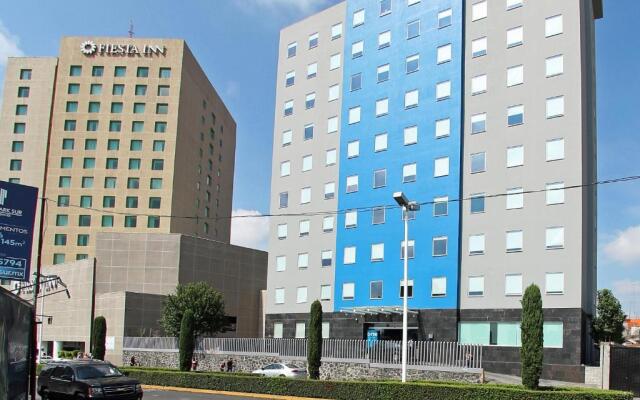 3-star
One Ciudad de México Periférico Sur
1.6 km from the venue
From USD 97 a night
See live prices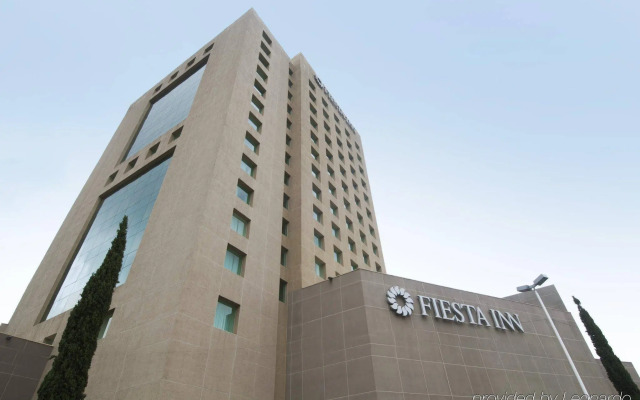 3-star
Fiesta Inn Periferico Sur
1.6 km from the venue
From USD 154 a night
See live prices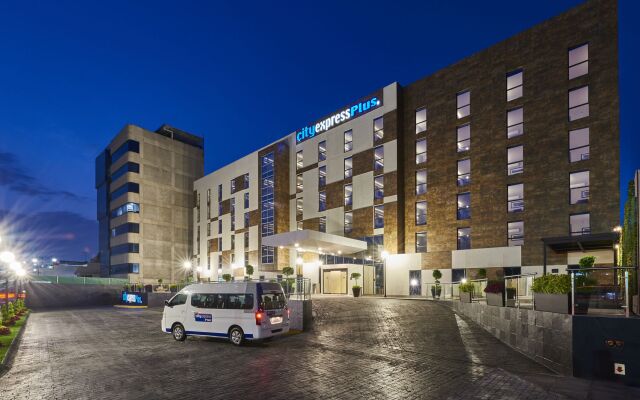 3-star
City Express Plus by Marriott Ciudad de México Periférico Sur Tlalpan
1.9 km from the venue
From USD 153 a night
See live prices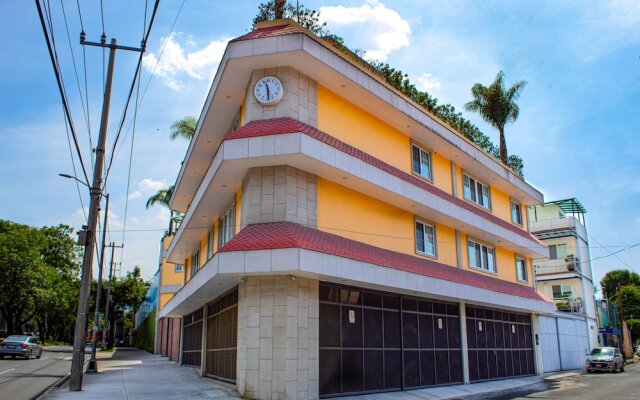 3-star
La Casa del Reloj - Zona de Hospitales
2.2 km from the venue
From USD 255 a night
See live prices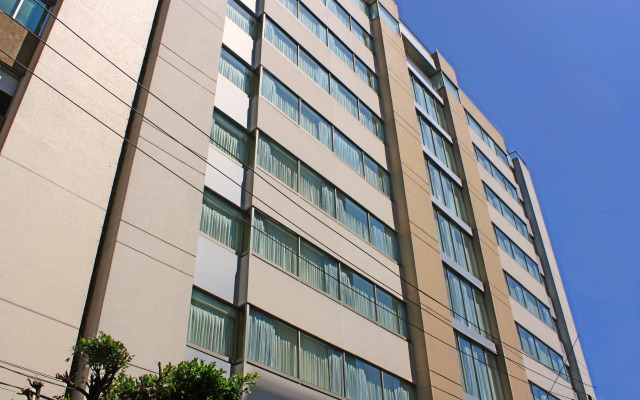 4-star
Suites Perisur Apartamentos Amueblados
3.3 km from the venue
From USD 137 a night
See live prices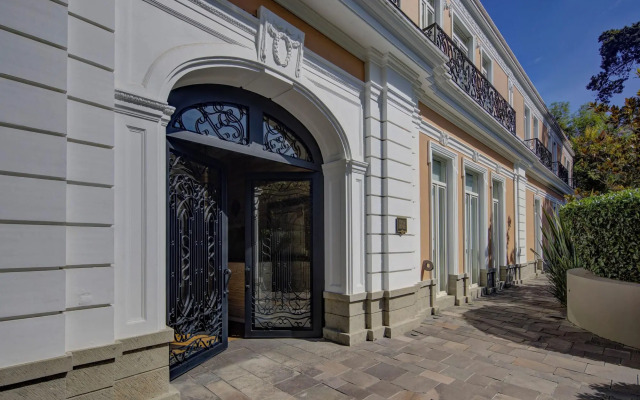 4-star
Hacienda Peña Pobre
4.1 km from the venue
From USD 214 a night
See live pricesStays close to Estadio Azteca, with availability checked when we built this guide. Tap a hotel for live prices on your dates.
Getting there
Transport
The cleanest arrival is the Tren Ligero (light rail): take Metro Line 2 to Tasqueña, then the light rail south to the 'Estadio Azteca' stop, which puts you a short walk from the ramps. Calzada de Tlalpan runs alongside for taxis and rideshare, and the CETRAM Huipulco transport hub is nearby. On-site parking is limited and clogs badly on matchdays and for World Cup fixtures, so public transport or a drop-off well before kick-off is strongly advised.
The area
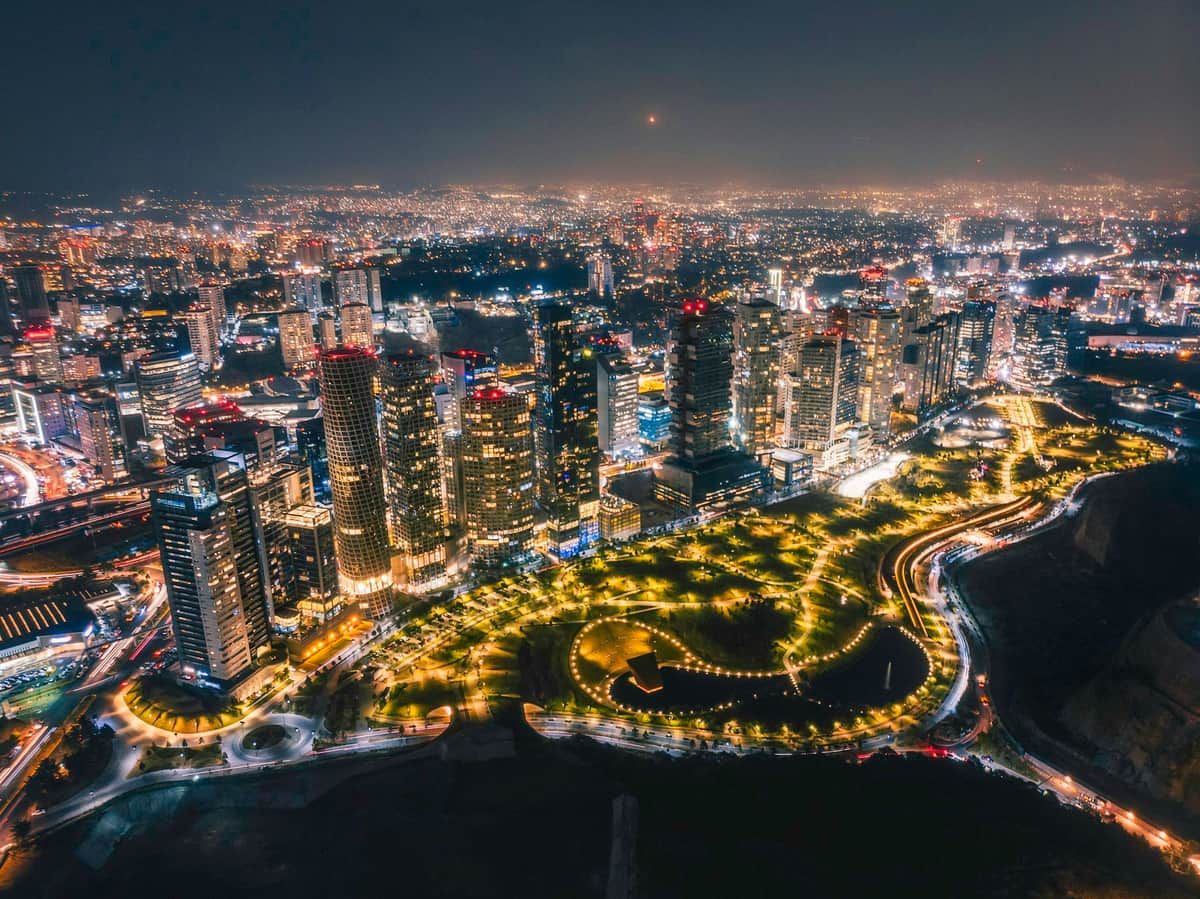
The stadium stands in the Santa Úrsula district on the Coyoacán/Tlalpan border in the south of Mexico City, a mostly residential and commercial area. It is a short hop from the Perisur mall and the Cuicuilco archaeological zone, with the historic centre of Coyoacán and the university district (UNAM/Ciudad Universitaria) within reach for a pre-match base.
Estadio Azteca · Mexico City, Mexico
Parking near Estadio Azteca
The closest car parks to Estadio Azteca, each marked with a blue P on the map above. On event days public transport is usually quicker than driving.
- Estacionamiento ZONA BEntrada B Estadio Azteca 5, Santa Úrsula Coapa, Ciudad de México219 m
- Parking LotCoyoacán416 m
- CovesparkCalzada de Tlalpan 4337, Bosques de Tetlameya, Ciudad de México454 m
- Biciestacionamiento HuipulcoCetram Huipulco, Calle Acoxpa, Huipulco, Ciudad de México458 m
- Estacionamiento aztecacalle san Cástulo #289Calzada de Tlalpan 3604, Huipulco, Ciudad de México466 m
- Estacionamiento HuipulcoCalzada de Tlalpan 4325, Bosques de Tetlameya, Ciudad de México483 m
Frequently asked questions
Where are the best seats in Estadio Azteca?
The Lateral 100 lower sideline blocks around the halfway line — closest to the pitch, roughly level with play and covered by the western roof. For a tactical overview at a fraction of the price, the Lateral 300 upper sidelines are excellent because the trackless bowl keeps every seat pointed at the grass.
What are the cheapest seats?
The uppermost general behind the goals — Alto Norte and Alto Sur (the old level 400) — and the Cabecera 300 upper ends are the cheapest. They are high and steep, but the view of the whole pitch stays clean.
Where do away fans sit?
For Liga MX, visiting support is allocated a segregated block, typically in a corner or upper end away from La Monumental in the north. For World Cup 2026 there are no home/away ends — seating is fully allocated and neutral.
Where is the best atmosphere?
The north end. Club América's La Monumental and the animación groups pack the Cabecera / Alto Norte, and that is where the noise is generated for 90 minutes.
What is the capacity?
Around 87,500 seated after the 2024–26 rebuild. For the World Cup the working capacity is trimmed to roughly 80,000–83,000 once broadcast, media and hospitality builds are installed.
Is it accessible for wheelchair users?
Yes — there are designated wheelchair-and-companion positions (priced around the Cabecera 300 level), step-free entrances and lifts to the premium tiers, upgraded to World Cup standard in the rebuild. Book early as spaces are limited.
How does it work for concerts?
The pitch becomes a floor GA/seated area with an end stage; sections directly behind and beside the stage are closed off. The covered western Lateral 100 and Plateas 200 give the best sound-and-sightline balance.
Which way does the home team attack, and where is the ultras end?
América's ultras, La Monumental, sit at the north end (now high in the Alto Norte), so that is the ‘home’ end and the loud goal to sit near.
Is it really called Estadio Banorte now?
Commercially, yes — Banorte took naming rights to help fund the rebuild — but most fans still call it the Azteca, and for the World Cup FIFA runs it as ‘Mexico City Stadium’ under sponsor-neutral rules.
How do section numbers work at Estadio Azteca?
Section numbers at Estadio Azteca follow the seating tiers. Lower sideline: Lateral 100 (west and east lower sidelines); Lower behind the goal: Norte 100 and Sur 100; Premium mid-ring: Plateas 200 (with the ring of 856 palcos); Upper sideline & ends: Lateral 300 (upper sidelines), Cabecera 300 (upper ends); Uppermost / general: Alto Norte and Alto Sur; Premium hospitality: Premium Chairman, Corner Club, Locker Club, Tunnel Club, Super Seats, Sierra Porch.
Does Estadio Azteca have a seating map with seat numbers?
Yes. Estadio Azteca's seating map is split into numbered sections across its tiers (Lower sideline Lateral 100 (west and east lower sidelines); Lower behind the goal Norte 100 and Sur 100; Premium mid-ring Plateas 200 (with the ring of 856 palcos); Upper sideline & ends Lateral 300 (upper sidelines), Cabecera 300 (upper ends); Uppermost / general Alto Norte and Alto Sur; Premium hospitality Premium Chairman, Corner Club, Locker Club, Tunnel Club, Super Seats, Sierra Porch), with individual seat numbers running within each section. Check the seating map on this page or the official chart for exact seat numbers.
What is the view like from the seats at Estadio Azteca?
The best views at Estadio Azteca are from Lateral 100 (west/Poniente) around the halfway line, mid rows — Closest to the pitch, roughly level with play, roof-covered and shaded — the most natural football sightline in the stadium. The weakest are Cabecera 300 corners and Alto Sur/Norte upper corners: Behind-goal upper corners give a flat, distant angle where the near goalmouth disappears and the far half compresses. For a seat-by-seat view, see the view-from-seat photos and the seating map for Estadio Azteca.
Where should I sit at Estadio Azteca with kids?
With kids at Estadio Azteca, pick aisle seats near a concourse so exits and toilet runs are easy. Note that the Upper sideline & ends is steep, so young children and anyone uneasy with heights are better lower down.
What are the stands at Estadio Azteca?
Estadio Azteca is made up of 6 main stands: Lower sideline; Lower behind the goal; Premium mid-ring; Upper sideline & ends; Uppermost / general; Premium hospitality.
What is the view like from the seats at Estadio Azteca?
For the best view at Estadio Azteca, aim for Lateral 100 (west/Poniente) around the halfway line, mid rows (Closest to the pitch, roughly level with play, roof-covered and shaded — the most natural football sightline in the stadium.); Lateral 300 upper sidelines (A fraction of lateral-100 prices but, thanks to the trackless bowl and steep rake, you still get a clean, complete tactical view of the whole pitch.). The view is most restricted from Cabecera 300 corners and Alto Sur/Norte upper corners (Behind-goal upper corners give a flat, distant angle where the near goalmouth disappears and the far half compresses.).
Which seats are shaded or undercover at Estadio Azteca?
Closest to the pitch, roughly level with play, roof-covered and shaded — the most natural football sightline in the stadium.
Is Estadio Azteca covered, and does it have a roof?
Estadio Azteca has a large roof covering most of the stands, while the pitch and the lowest rows stay open to the sky.
Where can I park at Estadio Azteca?
Car parks near Estadio Azteca include Estacionamiento ZONA B, Parking Lot, Covespark, Biciestacionamiento Huipulco and more. The closest is Estacionamiento ZONA B, about 219 m from the venue. On event days public transport is usually quicker than driving, so check the transport options too.
More seating guides
 Photo: Carolina Gómez / Google Maps
Estadio Akron
Guadalajara (Zapopan), Mexico · Football stadium
Seating guide
Estadio BBVA
Monterrey (Guadalupe), Mexico · Football stadium
Seating guide Photo: Jamshaid Ali / Google Maps
Allianz Arena
Munich, Germany · Football stadium
Seating guide
Allianz Parque
São Paulo, Brazil · Football stadium
Seating guide
Allianz Stadium
Turin, Italy · Football stadium
Seating guide
American Express Stadium
Brighton (Falmer), England · Football stadium
Seating guidePopular seating guides

The O2 Arena
London, England · Arena
Seating guide
Wembley Stadium
London, England · Multi-sport stadium
Seating guide
Tottenham Hotspur Stadium
London, England · Football stadium
Seating guide
Old Trafford
Manchester, England · Football stadium
Seating guide
Anfield
Liverpool, England · Football stadium
Seating guide
Ibrox Stadium
Glasgow, Scotland · Football stadium
Seating guideAlso in Mexico City
More to plan and book around Mexico City, all on Event Escapes.
Sources
- Estadio Azteca — Wikipedia
- Estadio Azteca renovation: key 2026 World Cup development — Football Ground Guide
- La evolución de las zonas en el Estadio Azteca — Mediotiempo
- Estadio Azteca: capacity, location and World Cup 2026 — FourFourTwo
- La Monumental — historia de la barra del América — El Futbolero
Hero image: ProtoplasmaKid, CC BY 4.0 — via Wikimedia Commons