




 View photos
Royal Albert Hall Seating Plan
Your seating map and chart: where to sit, the best seats and the view from your seat
“The Albert Hall”
Royal Albert Hall in photos
6 outside · 4 inside the venue
Where to sit at Royal Albert Hall
The best seats at Royal Albert Hall are Stalls front centre rows for the view. For value, choose Rausing Circle front rows, central blocks. Avoid Gallery. Royal Albert Hall seats 5,272.
Stalls front centre rows
The raked front half of the centre Stalls combines proximity to the stage with clear sightlines over the Arena floor, and is widely regarded as the best seating in the hall.
Full detail Best valueRausing Circle front rows, central blocks
Front-row Circle seats give a full panoramic view of the auditorium and stage for considerably less than Stalls or box prices.
Full detail Where to avoidGallery
Furthest from the stage, steeply raked and usually standing-only; fine for atmosphere but not for a clear view.
Full detailAbout Royal Albert Hall
The Royal Albert Hall is London's most famous concert hall, seating 5,272 across an elliptical auditorium that mixes an arena floor, a raked Stalls tier, private boxes on three levels, the top Rausing Circle and the standing Gallery. Every seat is close to the stage by arena standards, and the domed room is renowned for its acoustics, particularly for classical music and the BBC Proms.
The Royal Albert Hall is a Grade I listed elliptical concert hall in Kensington Gore, designed by Captain Francis Fowke and Major-General Henry Y. D. Scott and opened by Queen Victoria on 29 March 1871. The exterior measures roughly 83 by 72 metres and is crowned by a glazed dome rising 41 metres above the auditorium. Around 1,270 of the seats are privately owned by box holders, an arrangement that dates back to the hall's construction. The venue is best known internationally as the home of the BBC Proms, which it has hosted since 1941, and stages around 390 events in the auditorium each year.
Seating plan & map
General seating reference for Royal Albert Hall. Check your selected event for its exact configuration.
How the venue is set up
Arena (flat floor)
The ground-floor Arena is used as standing space, unreserved seating or formal floor seating depending on the event, with the stage typically at one end or in the round.
End-stage concert
Classic end-stage layout with the stage at the south end, Stalls and boxes facing it and the Gallery above.
In the round
For some events the stage sits at the centre of the auditorium with seating surrounding it, including the floor.
Seating levels explained
ArenaArena floor
The flat ground-floor area closest to the stage. Configured as standing, unreserved seating or reserved seating depending on the event.
Pros: Closest to the stage of any area. Standing Arena tickets are among the cheapest in the building.
Cons: Flat floor means sightlines can be blocked by taller audience members standing in front.
StallsRows A–K
The raked ground-level tier behind the Arena, with swivel seats in 11 rows. The front rows of the centre Stalls are considered the best seats in the house.
Pros: Raked seating gives clear sightlines over the Arena. Swivel seats let you angle towards the stage. Front centre rows combine proximity with an elevated view.
Cons: Rear rows are far from the stage in end-stage layouts.
Loggia BoxesBoxes 1–30
Private boxes of eight seats directly above the Stalls, reached by around five steps from the Loggia corridor. These boxes are not wheelchair-accessible.
Pros: Private space for small groups. Food and drink can be pre-ordered to the box.
Cons: Side-on angle to an end-stage performance. Steps up from the corridor.
Grand Tier BoxesBoxes 1–48
The third-level box tier, with boxes seating up to 12. Lifts at Doors 1 and 8 serve this level.
Pros: Elevated full-room view over the Arena. Lift access. Larger boxes suit groups.
Cons: Further from the stage than lower tiers.
Second Tier BoxesBoxes 1–66
Smaller boxes of five seats (a handful seat eight) on the fourth level, with lift access.
Pros: Intimate box experience. Lift access via Doors 1 and 8.
Cons: High up and set back from the stage.
Rausing CircleBlocks P–Y
The top seated tier, wrapping around the auditorium in lettered blocks with wheelchair spaces at the rear.
Pros: Front rows of the central blocks offer a panoramic view of the whole hall at much lower prices. Home to six wheelchair spaces with companion seats.
Cons: Some side seats have restricted views of an end-stage performance. A long way from the stage in an arena this tall.
GalleryStanding Gallery
The uppermost level, sold as unreserved standing or informal sitting space. Historically known as the 'promenade', it is the cheapest way into the hall.
Pros: Cheapest tickets in the building. Characterful views down into the arena.
Cons: Steep, furthest from the stage and usually standing-only.
Best seats at Royal Albert Hall
Best overall view and sound
Stalls front centre rows
The raked front half of the centre Stalls combines proximity to the stage with clear sightlines over the Arena floor, and is widely regarded as the best seating in the hall.
Best value
Rausing Circle front rows, central blocks
Front-row Circle seats give a full panoramic view of the auditorium and stage for considerably less than Stalls or box prices.
Closest to the stage
Arena floor front rows
Front-row Arena seats or standing places put you immediately in front of the stage, within a few metres of the performers.
Small groups and special occasions
Grand Tier and Second Tier boxes
Private boxes seat five to twelve people with their own space, and food and drink can be pre-ordered to the box.
Wheelchair users
Rausing Circle wheelchair spaces
The Circle has six wheelchair spaces with companion seating and lift access from Doors 1 and 8.
| For | Sections | Why |
|---|---|---|
| Best overall view and sound | Stalls front centre rows | The raked front half of the centre Stalls combines proximity to the stage with clear sightlines over the Arena floor, and is widely regarded as the best seating in the hall. |
| Best value | Rausing Circle front rows, central blocks | Front-row Circle seats give a full panoramic view of the auditorium and stage for considerably less than Stalls or box prices. |
| Closest to the stage | Arena floor front rows | Front-row Arena seats or standing places put you immediately in front of the stage, within a few metres of the performers. |
| Small groups and special occasions | Grand Tier and Second Tier boxes | Private boxes seat five to twelve people with their own space, and food and drink can be pre-ordered to the box. |
| Wheelchair users | Rausing Circle wheelchair spaces | The Circle has six wheelchair spaces with companion seating and lift access from Doors 1 and 8. |
Seats to avoid & obstructed views
Gallery: Furthest from the stage, steeply raked and usually standing-only; fine for atmosphere but not for a clear view.
Rausing Circle side blocks: Some side seats have partially restricted views of an end-stage performance.
Arena floor rear rows: On the flat floor, a taller person standing in front can block the view entirely.
Accessibility & companion seating
The hall is fully accessible: lifts at Doors 1 and 8 run from the Basement to the Gallery, there are accessible toilets at Doors 4, 8 and 12 plus on the Grand Tier and Circle, and six wheelchair spaces sit in the Rausing Circle with companion seats. Infra-red headsets and hearing loops are available, selected events are audio-described or BSL-interpreted, and large-print programmes can be provided. The Arena floor and Stalls are step-free, while Loggia boxes are reached by steps and are not wheelchair-accessible.
Where: Rausing Circle wheelchair spaces
Food & drink at Royal Albert Hall
The Verdi Italian Kitchen sits at Rausing Circle level with views over the auditorium, and the ground-floor Cafe Bar serves drinks and light meals before performances and in the interval. The Coda restaurant hosts afternoon tea, and audience members in boxes can pre-order food to be delivered to their box.
Worth seeking out
- Verdi Italian Kitchen on the Circle level
- Coda afternoon tea restaurant
- Pre-ordered food delivery to boxes
Hotels near Royal Albert Hallfrom USD 251 a night
All hotels & live prices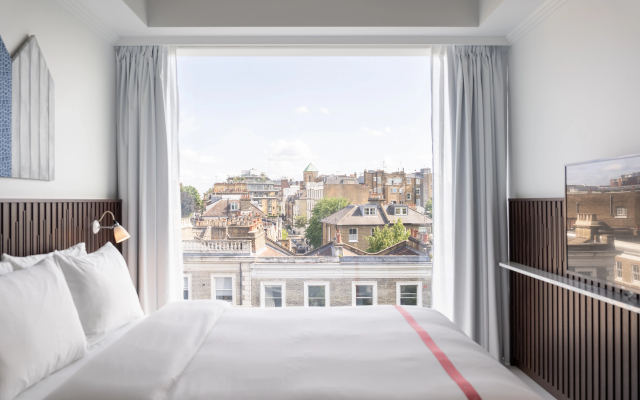 3-star
Ruby Zoe Hotel London
1.8 km from the venue
From USD 405 a night
See live prices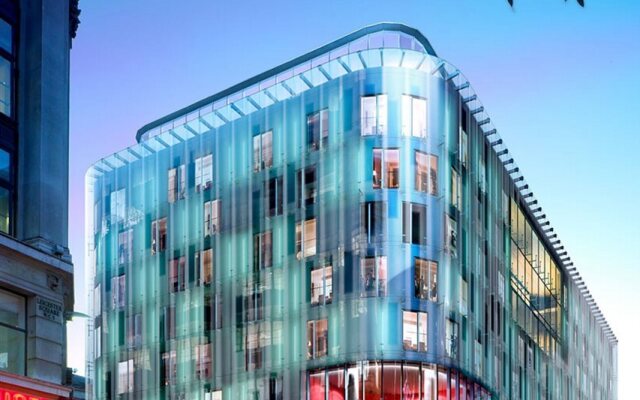 5-star
W London
3.3 km from the venue
From USD 904 a night
See live prices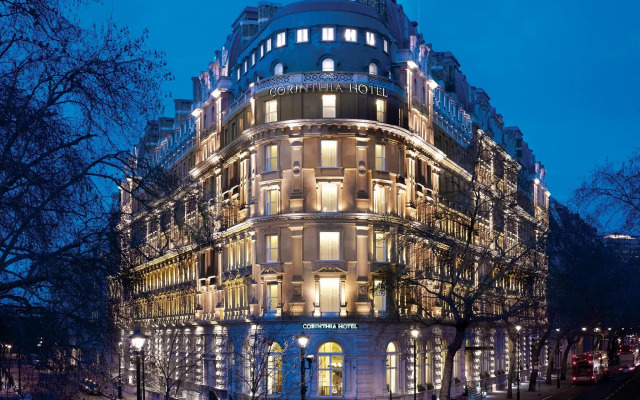 5-star
Corinthia London
3.7 km from the venue
From USD 2,238 a night
See live prices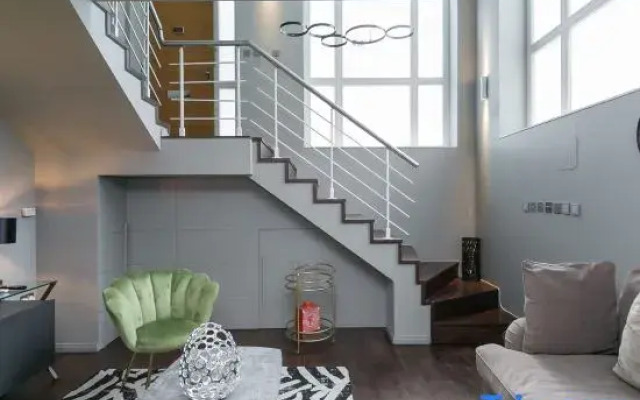 4-star
The Galleries II - Covent Garden - by Frankie
4.2 km from the venue
From USD 484 a night
See live prices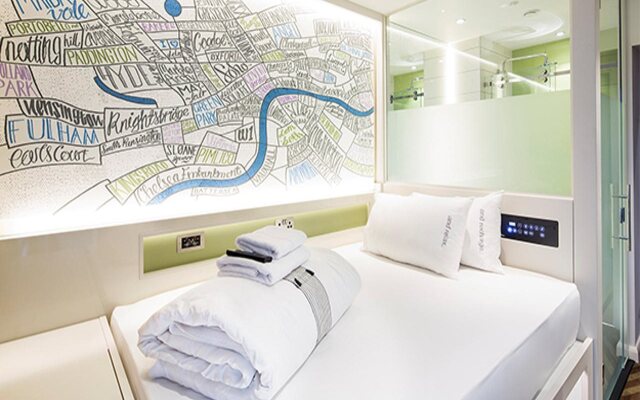 3-star
Hub By Premier Inn London Camden
4.7 km from the venue
From USD 251 a night
See live pricesStays close to Royal Albert Hall, with availability checked when we built this guide. Tap a hotel for live prices on your dates.
Getting there
Transport
The nearest London Underground station is South Kensington (Circle, District and Piccadilly lines), about a ten-minute walk through Hyde Park or along Exhibition Road. Knightsbridge station is a similar distance to the east. Buses stop on Kensington Gore outside the hall, and the venue is served by the 9, 52 and 452 routes among others.
The area
The hall stands on Kensington Gore opposite the Albert Memorial, at the southern edge of Hyde Park and close to Imperial College London. The museums of South Kensington — the V&A, Natural History Museum and Science Museum — are a short walk away, and the surrounding streets have a wide choice of cafes and restaurants.
Royal Albert Hall · London, England
Parking near Royal Albert Hall
The closest car parks to Royal Albert Hall, each marked with a blue P on the map above. On event days public transport is usually quicker than driving.
- YourParkingSpacePrinces Gate, London233 m
- Princess Gate London Parking | JustParkPrinces Gate, London320 m
- Kingston House Garage SouthKingston House Garage South, 1-32 Ennismore Gardens, London416 m
- Palace gatePalace Gate, London459 m
- NeaQueen's Gate parking50 Queen's Gate, London500 m
- Serpentine Car Park395 West Carriage Drive, London545 m
Frequently asked questions
What is the seating capacity of the Royal Albert Hall?
The Royal Albert Hall seats 5,272 people, with additional standing room on the Arena floor and in the Gallery at some events.
What are the best seats at the Royal Albert Hall?
The front centre rows of the Stalls are generally considered the best seats, balancing proximity to the stage with raked sightlines. For value, the front rows of the central Rausing Circle blocks give a full panoramic view at lower prices.
Does the Royal Albert Hall have private boxes?
Yes. There are boxes on three levels — Loggia, Grand Tier and Second Tier — seating between five and twelve people each. Around 1,270 seats are privately owned by box holders and are released for sale through the hall's box office and authorised agents.
Is the Royal Albert Hall wheelchair accessible?
Yes. Lifts at Doors 1 and 8 serve every level from the Basement to the Gallery, there are six wheelchair spaces in the Rausing Circle with companion seats, and accessible toilets are located at Doors 4, 8 and 12 plus on the Grand Tier and Circle.
What is the Gallery at the Royal Albert Hall?
The Gallery is the highest level of the hall, sold as unreserved standing or informal sitting space. It is the cheapest way in and looks down over the whole auditorium, but it is far from the stage.
Is there a dress code at the Royal Albert Hall?
There is no official dress code at the Royal Albert Hall; most concert-goers dress smart-casual.
How do I get to the Royal Albert Hall by public transport?
South Kensington Underground station (Circle, District and Piccadilly lines) is about a ten-minute walk away through Hyde Park or along Exhibition Road. Several bus routes stop on Kensington Gore directly outside the hall.
Which seats are best for concerts at Royal Albert Hall?
The ground-floor Arena is used as standing space, unreserved seating or formal floor seating depending on the event, with the stage typically at one end or in the round. For specific sections, aim for Arena floor front rows — Front-row Arena seats or standing places put you immediately in front of the stage, within a few metres of the performers.
How do section numbers work at Royal Albert Hall?
Section numbers at Royal Albert Hall follow the seating tiers. Arena: Arena floor; Stalls: Rows A–K; Loggia Boxes: Boxes 1–30; Grand Tier Boxes: Boxes 1–48; Second Tier Boxes: Boxes 1–66; Rausing Circle: Blocks P–Y; Gallery: Standing Gallery.
Does Royal Albert Hall have a seating plan with seat numbers?
Yes. Royal Albert Hall's seating plan is split into numbered sections across its tiers (Arena Arena floor; Stalls Rows A–K; Loggia Boxes Boxes 1–30; Grand Tier Boxes Boxes 1–48; Second Tier Boxes Boxes 1–66; Rausing Circle Blocks P–Y; Gallery Standing Gallery), with individual seat numbers running within each section. Check the seating plan on this page or the official chart for exact seat numbers.
What is the view like from the seats at Royal Albert Hall?
The best views at Royal Albert Hall are from Stalls front centre rows — The raked front half of the centre Stalls combines proximity to the stage with clear sightlines over the Arena floor, and is widely regarded as the best seating in the hall. The weakest are Gallery: Furthest from the stage, steeply raked and usually standing-only; fine for atmosphere but not for a clear view. For a seat-by-seat view, see the view-from-seat photos and the seating plan for Royal Albert Hall.
Where should I sit at Royal Albert Hall with kids?
With kids at Royal Albert Hall, pick aisle seats near a concourse so exits and toilet runs are easy. Note that the Gallery is steep, so young children and anyone uneasy with heights are better lower down.
What are the stands at Royal Albert Hall?
Royal Albert Hall is made up of 7 main stands: Arena; Stalls; Loggia Boxes; Grand Tier Boxes; Second Tier Boxes; Rausing Circle; Gallery.
What is the view like from the seats at Royal Albert Hall?
For the best view at Royal Albert Hall, aim for Stalls front centre rows (The raked front half of the centre Stalls combines proximity to the stage with clear sightlines over the Arena floor, and is widely regarded as the best seating in the hall.); Rausing Circle front rows, central blocks (Front-row Circle seats give a full panoramic view of the auditorium and stage for considerably less than Stalls or box prices.). The view is most restricted from Gallery (Furthest from the stage, steeply raked and usually standing-only; fine for atmosphere but not for a clear view.).
Is Royal Albert Hall covered, and does it have a roof?
The Royal Albert Hall is a fully enclosed domed concert hall with every seat under the permanent glazed roof.
Where can I park at Royal Albert Hall?
Car parks near Royal Albert Hall include YourParkingSpace, Princess Gate London Parking | JustPark, Kingston House Garage South, Palace gate and more. The closest is YourParkingSpace, about 233 m from the venue. On event days public transport is usually quicker than driving, so check the transport options too.
More seating guides

The O2 Arena
London, England · Arena
Seating guide
First Direct Arena
Leeds, England · Arena
Seating guide
Motorpoint Arena Nottingham
Nottingham, England · Arena
Seating guide
Wembley Stadium
London, England · Multi-sport stadium
Seating guide
M&S Bank Arena Liverpool
Liverpool, England · Arena
Seating guide
Utilita Arena Birmingham
Birmingham, England · Arena
Seating guidePopular seating guides

Tottenham Hotspur Stadium
London, England · Football stadium
Seating guide
Old Trafford
Manchester, England · Football stadium
Seating guide
Anfield
Liverpool, England · Football stadium
Seating guide
Ibrox Stadium
Glasgow, Scotland · Football stadium
Seating guide
AO Arena
Manchester, England · Arena
Seating guide
Barclays Center
Brooklyn, USA · Arena
Seating guideAlso in London
More to plan and book around London, all on Event Escapes.
Sources
- Royal Albert Hall — Wikipedia
- Venue and seating plan — Royal Albert Hall
- Restaurants and bars — Royal Albert Hall
- Food and drink in your box — Royal Albert Hall
- Best seats at the Royal Albert Hall — London Theatre Direct
- Royal Albert Hall seating plan — SeatPlan
- A View From My Seat — Royal Albert Hall
Hero image: Diliff, CC BY-SA 3.0 — via Wikimedia Commons