




 Photo: Kazuk Hiros / Google Maps View photos
Japan National Stadium Seating Map
Your seating plan and chart: where to sit, the best seats and the view from your seat
“New National Stadium” · “Kokuritsu”
Going to Japan National Stadium?
All tickets & hotelsJapan National Stadium in photos
5 outside · 4 inside the venue
Where should you sit at Japan National Stadium?
The best seats at Japan National Stadium are Middle tier along the main (west) side at halfway for the view. For value, choose Upper-tier sections. Avoid Lower-tier seats behind the goals for football or rugby. Japan National Stadium seats 68,000.
Middle tier along the main (west) side at halfway
A central, elevated view of the whole field and the finish line.
Full detail Best valueUpper-tier sections
The cheapest seats, sheltered by the roof eaves, with a full overview.
Full detail Where to avoidLower-tier seats behind the goals for football or rugby
The athletics track pushes these far from the action.
Full detailAbout Japan National Stadium
The Japan National Stadium seats around 68,000 (nearer 60,000 for pitch sports with the athletics track present) in three tiers under Kengo Kuma's timber-eaved roof. The best all-round views are along the main side at halfway, the upper tier is sheltered by the eaves and the best value, and the home straight is best for athletics finishes. The running track sets spectators back from a football or rugby pitch. Built for Tokyo 2020, it hosts athletics, football and rugby internationals, finals and major concerts.
Designed by Kengo Kuma, the stadium opened in 2019 as the centrepiece of the Tokyo 2020 Olympics, with layered timber eaves using wood from all 47 prefectures and abundant greenery giving a low, forest-like profile. An athletics track rings the pitch, and three tiers of seating sit beneath a wooden lattice roof canopy.
Japan National Stadium seating map
General seating reference for Japan National Stadium, also known as the Japan National Stadium seating plan, seating chart or seat plan. Check your selected event for its exact configuration.
What is the Japan National Stadium seating capacity?
The Japan National Stadium seating capacity is about 68,000 seats. The number in use changes with the layout, so here is how each set-up works.
Athletics
Built for Tokyo 2020 track and field and ceremonies; the running track sets spectators back from the infield.
Football / rugby
Japan national football and rugby matches and finals in a pitch-focused layout, capacity nearer 60,000 with the track present.
Concerts / events
Major concerts and events, with staging on the infield.
What are the seating levels at Japan National Stadium?
Lower tierFirst-level blocks around the track
The lowest ring, set back beyond the athletics track.
Pros: The closest available level and good for athletics finishes.
Cons: The track distances you from a football or rugby pitch.
Middle tierMid blocks
The intermediate band with strong overall sightlines.
Pros: A balanced view of the whole field and track.
Cons: Mid-range pricing.
Upper tierThird-level blocks under the eaves
The top ring beneath the wooden roof canopy.
Pros: Sheltered by the eaves, a panoramic view, and the best value.
Cons: High and far from the field.
What are the best seats at Japan National Stadium?
Best overall
Middle tier along the main (west) side at halfway
A central, elevated view of the whole field and the finish line.
Best value
Upper-tier sections
The cheapest seats, sheltered by the roof eaves, with a full overview.
Athletics finish line
Lower or middle tier at the home straight
The best angle to watch sprint finishes and field events.
Shade / cover
Upper rows under the timber eaves
The overhanging roof shelters the top rows from sun and rain.
Football / rugby
Middle tier along the touchline
The best pitch-focused view given the surrounding track.
| For | Sections | Why |
|---|---|---|
| Best overall | Middle tier along the main (west) side at halfway | A central, elevated view of the whole field and the finish line. |
| Best value | Upper-tier sections | The cheapest seats, sheltered by the roof eaves, with a full overview. |
| Athletics finish line | Lower or middle tier at the home straight | The best angle to watch sprint finishes and field events. |
| Shade / cover | Upper rows under the timber eaves | The overhanging roof shelters the top rows from sun and rain. |
| Football / rugby | Middle tier along the touchline | The best pitch-focused view given the surrounding track. |
Which seats should you avoid at Japan National Stadium?
Lower-tier seats behind the goals for football or rugby: The athletics track pushes these far from the action.
Highest upper-tier back rows: Steep and distant from the field.
Bend and curve seats far from the finish for athletics: A poor angle on finish-line events.
Front lower rows for staged concerts: A restricted view depending on the stage position.
Where is accessible seating at Japan National Stadium?
As a modern Olympic venue, the stadium has extensive accessible and companion seating on all levels, with step-free access, lifts, accessible toilets and sensory rooms. Positions are booked through the event ticketing operator.
Where: Accessible seating distributed on every tier, including barrier-free rows.
What food and drink is there at Japan National Stadium?
On J-League matchdays at the national stadium (now branded MUFG Stadium), concession stands operate both inside the bowl and outside the ground, trading from gate opening until about 15 minutes into the second half. When FC Tokyo play here, the club brings its familiar Ajinomoto Stadium 'classic gourmet' stall line-up across, and runs the AO-AKA PARK fan zone at the nearby Tokyo Metropolitan Gymnasium with additional food stalls including its TOKYO DOROMPA Kitchen.
At FC Tokyo fixtures the AO-AKA PARK and TOKYO DOROMPA Kitchen stalls do not accept cash: payment is by electronic money or card, with accepted brands varying by stall. In-stadium stands close around 15 minutes into the second half.
Worth seeking out
- Ajinomoto Stadium 'classic gourmet' stalls at FC Tokyo matches
- TOKYO DOROMPA Kitchen at the AO-AKA PARK fan zone
- Concession stands inside and outside the stadium bowl
Hotels near Japan National Stadium
All hotels & live prices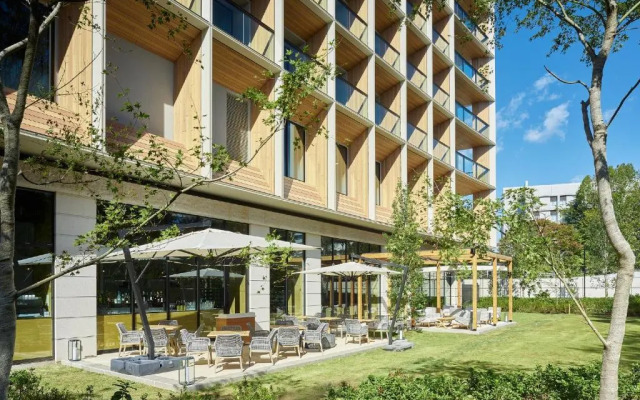 4-star
Mitsui Garden Hotel Jingugaien Tokyo Premier
Tokyo
See live prices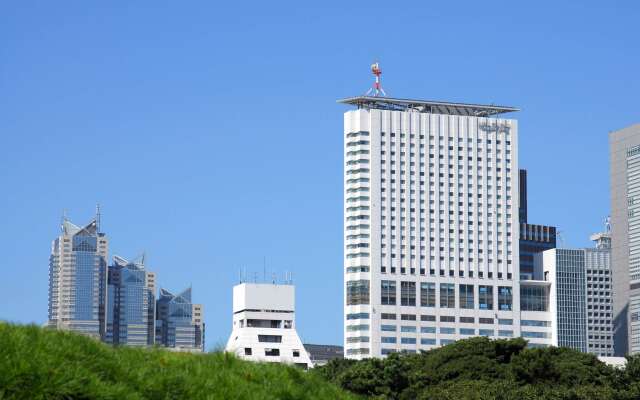 4-star
Century Southern Tower Hotel
Tokyo
See live pricesStays close to Japan National Stadium, with availability checked when we built this guide. Tap a hotel for live prices on your dates.
How do you get to Japan National Stadium?
Transport
Kokuritsu-Kyogijo station on the Oedo line and Sendagaya and Shinanomachi on the JR Chuo-Sobu line are all a few minutes' walk. It is very well served by rail, with little public parking.
The area
In the Kasumigaoka area of Shinjuku, beside the Meiji Jingu Gaien gardens and the Chichibunomiya rugby ground, close to central Tokyo.
Japan National Stadium · Tokyo, Japan
Japan National Stadium parking: where can you park?
The closest car park to Japan National Stadium is Kokuritsukyogijo P 2 Kankeisha Parking Lot, 167 m away. Here are 6 car parks nearest the venue, each marked with a blue P on the map above. On event days public transport is usually quicker than driving.
- Kokuritsukyogijo P 2 Kankeisha Parking Lot駐車場, 1-chōme-17−1 Sendagaya, Shibuya167 m
- 東京体育館第二駐車場Parking lot, 1-chōme-17-1 Sendagaya, Shibuya171 m
- Kunitachikyogijo P 1 Kankeisha Parking Lot1-chōme-17-1 Sendagaya, Shibuya186 m
- バイク自転車駐輪場2-3 Kasumigaokamachi, Shinjuku City204 m
- Tokyotaiikukan Daiichi Parking Lot1-chōme-17-17 Sendagaya, Shibuya232 m
- エコロパーク 千駄ヶ谷第141-chōme-13-13 Sendagaya, Shibuya236 m
Frequently asked questions
What is the capacity of the Japan National Stadium?
About 68,000 in athletics mode, nearer 60,000 for pitch sports, and expandable with temporary seating.
Who designed it?
Architect Kengo Kuma, whose design uses timber eaves with wood from all 47 Japanese prefectures.
What was it built for?
It was the main stadium for the Tokyo 2020 Olympics and Paralympics, hosting the ceremonies and track and field.
Does it have a permanent home team?
No, it has no permanent tenant, but it stages Japan football and rugby internationals, athletics and concerts.
Where are the best seats?
The middle tier along the main side at halfway for pitch sports, or the home straight for athletics.
How do I get there?
Kokuritsu-Kyogijo (Oedo line) and Sendagaya / Shinanomachi (JR) are all a few minutes' walk.
Which seats are best for concerts at Japan National Stadium?
Major concerts and events, with staging on the infield.
How do section numbers work at Japan National Stadium?
Section numbers at Japan National Stadium follow the seating tiers. Lower tier: First-level blocks around the track; Middle tier: Mid blocks; Upper tier: Third-level blocks under the eaves.
Does Japan National Stadium have a seating map with seat numbers?
Yes. Japan National Stadium's seating map is split into numbered sections across its tiers (Lower tier First-level blocks around the track; Middle tier Mid blocks; Upper tier Third-level blocks under the eaves), with individual seat numbers running within each section. Check the seating map on this page or the official chart for exact seat numbers.
What is the view like from the seats at Japan National Stadium?
The best views at Japan National Stadium are from Middle tier along the main (west) side at halfway: A central, elevated view of the whole field and the finish line. The weakest are Lower-tier seats behind the goals for football or rugby: The athletics track pushes these far from the action. For a seat-by-seat view, see the view-from-seat photos and the seating map for Japan National Stadium.
Where are the wheelchair-accessible seats at Japan National Stadium?
As a modern Olympic venue, the stadium has extensive accessible and companion seating on all levels, with step-free access, lifts, accessible toilets and sensory rooms. Positions are booked through the event ticketing operator. Locations: Accessible seating distributed on every tier, including barrier-free rows..
What is the view like from the seats at Japan National Stadium?
For the best view at Japan National Stadium, aim for Middle tier along the main (west) side at halfway (A central, elevated view of the whole field and the finish line.); Upper-tier sections (The cheapest seats, sheltered by the roof eaves, with a full overview.). The view is most restricted from Lower-tier seats behind the goals for football or rugby (The athletics track pushes these far from the action.).
Is Japan National Stadium covered, and does it have a roof?
Japan National Stadium has a roof that covers the spectator seating while the field is open to the sky.
Where can I park at Japan National Stadium?
Car parks near Japan National Stadium include Kokuritsukyogijo P 2 Kankeisha Parking Lot, 東京体育館第二駐車場, Kunitachikyogijo P 1 Kankeisha Parking Lot, バイク自転車駐輪場 and more. The closest is Kokuritsukyogijo P 2 Kankeisha Parking Lot, about 167 m from the venue. On event days public transport is usually quicker than driving, so check the transport options too.
More seating guides
 Photo: cohaqu kirii / Google Maps
International Stadium Yokohama
Yokohama, Japan · Football stadium
Seating guide Photo: Accor Stadium / Google Maps
Accor Stadium
Sydney, Australia · Multi-sport stadium
Seating guide Photo: Taylor Wimberly / Google Maps
Alamodome
San Antonio, USA · Multi-sport stadium
Seating guide Photo: Peifeng / Google Maps
Singapore National Stadium
Singapore, Singapore · Multi-sport stadium
Seating guide Photo: Google Maps
Marvel Stadium
Melbourne, Australia · Multi-sport stadium
Seating guide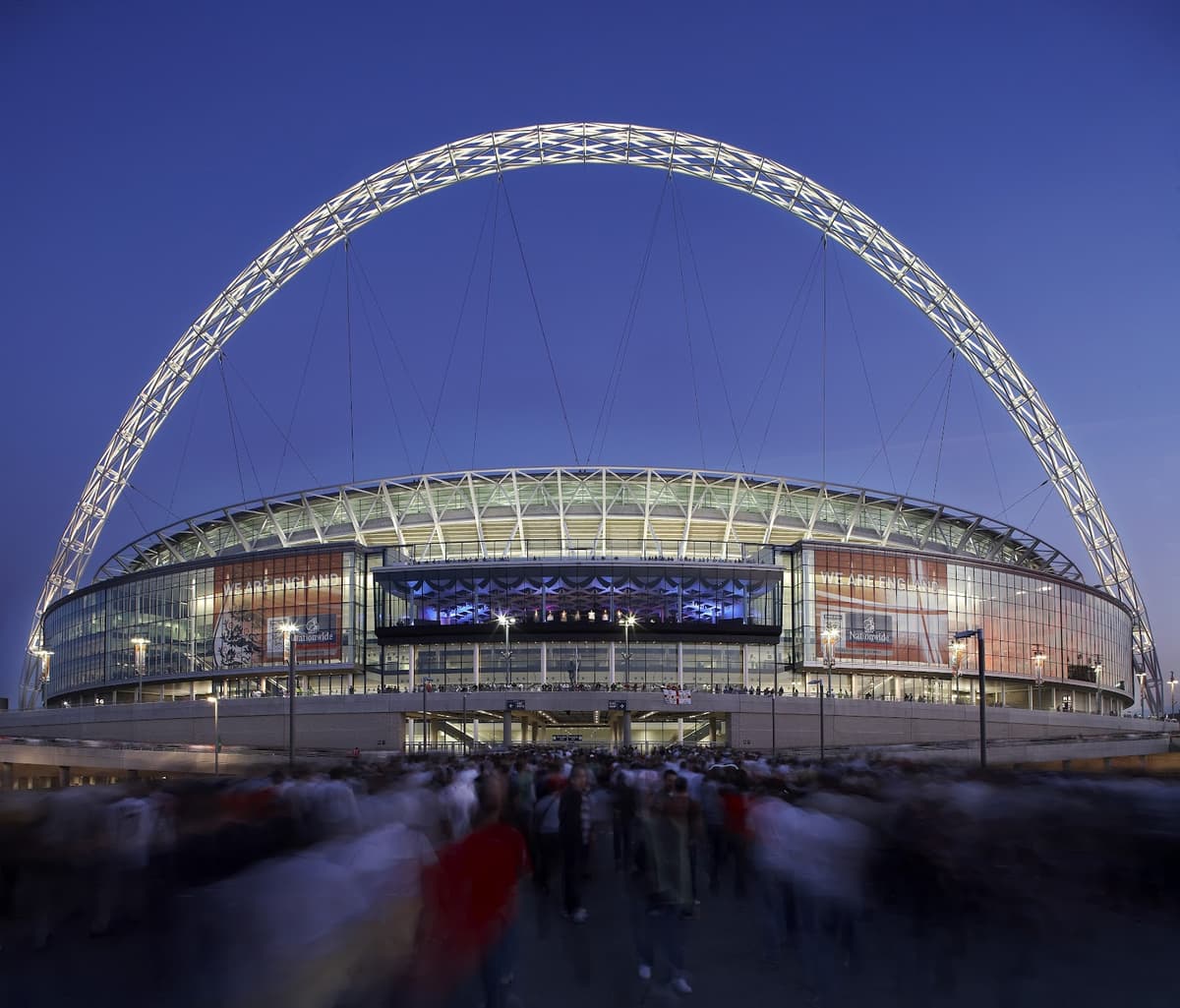 Photo: NoUser / Google Maps
Wembley Stadium
London, England · Multi-sport stadium
Seating guidePopular seating guides
 Photo: Google Maps
The O2 Arena
London, England · Arena
Seating guide Photo: Steve White / Google Maps
Tottenham Hotspur Stadium
London, England · Football stadium
Seating guide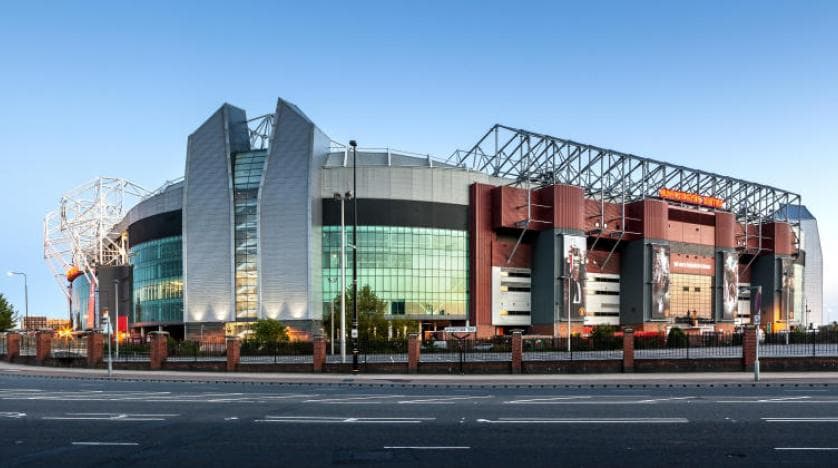 Photo: Ebrahim Kahlawi Hassan Mohamed / Google Maps
Old Trafford
Manchester, England · Football stadium
Seating guide Photo: Priyanto Akhmad Solihin / Google Maps
Anfield
Liverpool, England · Football stadium
Seating guide Photo: Google Maps
Ibrox Stadium
Glasgow, Scotland · Football stadium
Seating guide Photo: Rakesh Singh / Google Maps
AO Arena
Manchester, England · Arena
Seating guideAlso in Tokyo
More to plan and book around Tokyo, all on Event Escapes.